
In today’s dynamic real estate market, buyers often face intense competition, especially in desirable areas. To stand out and secure their dream home, many are turning to strategic tools like the escalation clause in real estate offers, notes Jackson Property Management. This contractual provision can be a game-changer, allowing a buyer’s bid to automatically increase under specific conditions.
An escalation clause is essentially a pre-emptive strike in a bidding war. It states that a buyer is willing to pay a certain amount above any higher offer received, up to a predetermined maximum price. This mechanism aims to make an offer more attractive without immediately revealing the buyer’s absolute top budget.
What is an Escalation Clause?
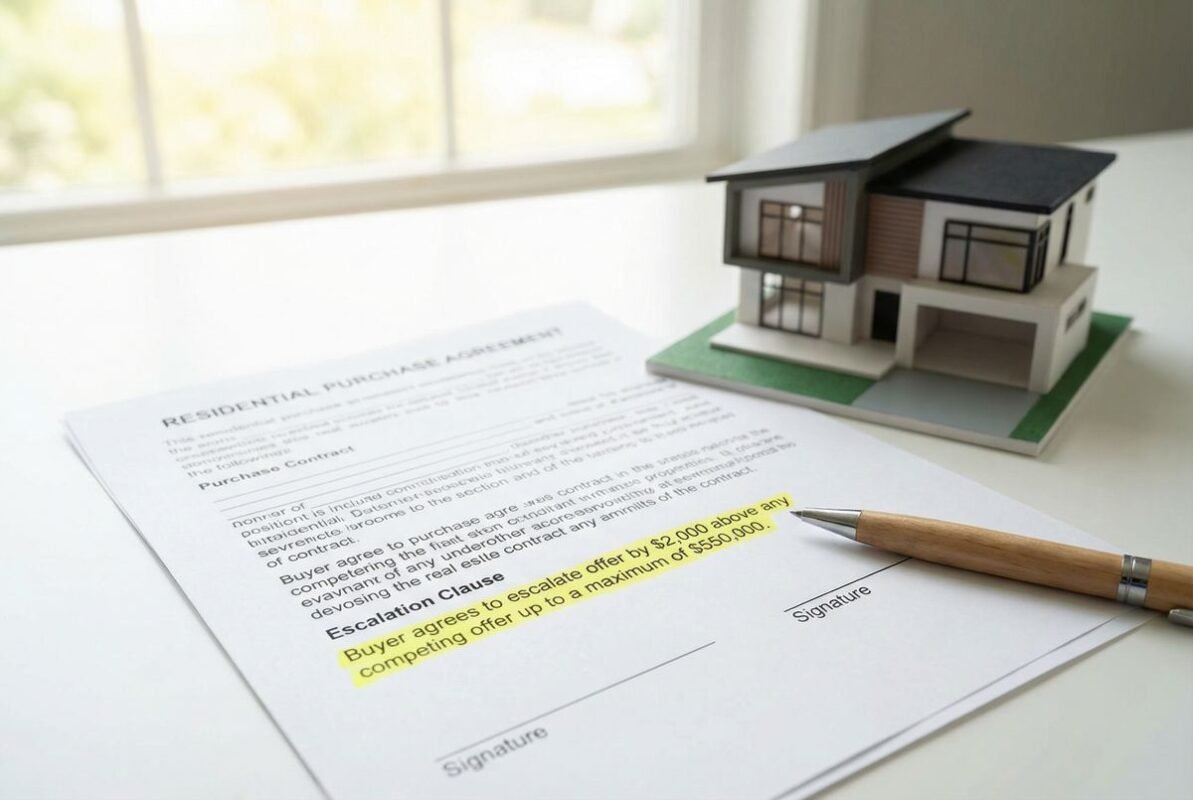
An escalation clause is a specific term added to a real estate purchase agreement. It stipulates that if the seller receives another offer that is higher than the buyer’s current offer, the buyer’s offer will automatically increase by a specified increment above that competing offer, up to a cap. This cap is the maximum price the buyer is willing to pay for the property.
For example, if a buyer offers $400,000 for a home and includes an escalation clause stating they will pay $2,000 above any higher offer, up to $420,000, their offer automatically adjusts. If another buyer submits an offer for $405,000, the first buyer’s offer would escalate to $407,000. This continues until the cap of $420,000 is reached or no higher offers are received.
Key Components of an Escalation Clause
A well-drafted escalation clause typically includes three critical elements:
- Initial Offer Price: The starting bid the buyer is making for the property.
- Escalation Increment:The specific amount by which the offer will increase above a competing bid (e.g., $1,000, $2,000, or a percentage).
- Maximum Purchase Price (Cap): The absolute highest amount the buyer is willing to pay for the property. This is a crucial limit that protects the buyer from overpaying.
When to Consider Using an Escalation Clause
The decision to include an escalation clause depends heavily on the market conditions and the buyer’s strategy. It is most commonly seen in highly competitive seller’s markets where homes receive multiple offers shortly after listing. Understanding these scenarios can help buyers determine if this tool is right for them.
Advantages for Buyers
For buyers, the primary advantage is the increased likelihood of securing a desired property without immediately offering their absolute highest price. It allows them to remain competitive in a bidding war while potentially saving money if the competing offers don’t push the price to their maximum. It also demonstrates strong interest and commitment to the seller.
Disadvantages for Buyers
However, there are potential downsides. An escalation clause reveals the buyer’s maximum budget to the seller, which could be used to negotiate a higher price even if other offers aren’t significantly higher. There’s also the risk of overpaying if the market is irrational or if the buyer gets caught up in the emotion of a bidding war. It’s essential to have a clear financial limit.
Seller’s Perspective
From a seller’s viewpoint, an escalation clause can be highly attractive. It simplifies the negotiation process by automatically increasing the offer, potentially leading to a quicker sale at a higher price. However, sellers must carefully review the terms to ensure clarity and avoid any ambiguities that could complicate the transaction. Some sellers may prefer a “best and final” offer scenario to avoid prolonged negotiations.
Escalation Clause vs. Traditional Bidding
Understanding the differences between an escalation clause and traditional bidding methods is crucial for both buyers and sellers. Each approach has its own dynamics and implications for the negotiation process.
| Feature | Escalation Clause | Traditional Bidding |
|---|---|---|
| Buyer’s Strategy | Automatic increase up to a cap | Submit highest desired price upfront or negotiate incrementally |
| Transparency | Reveals maximum budget to seller | Buyer’s maximum budget often remains private initially |
| Risk of Overpaying | Possible if cap is set too high in a heated market | Less direct risk of automatic overpayment, but can still occur in bidding wars |
| Seller’s Benefit | Potentially higher sale price, streamlined process | Clear, single offer to evaluate |
| Market Suitability | Highly competitive seller’s markets | Any market, but less effective in intense bidding wars |
Myths and Misconceptions About Escalation Clauses
Despite their growing popularity, several myths surround the use of an escalation clause in real estate. Dispelling these can help buyers and sellers make more informed decisions.
Myth 1: It always guarantees you the home.
While an escalation clause significantly strengthens an offer, it doesn’t guarantee success. A seller might still choose a lower offer with more favorable terms, such as a cash offer, fewer contingencies, or a more flexible closing date. The highest price isn’t always the only factor.
Myth 2: Sellers love them because they always get more money.
Sellers generally appreciate the higher price potential, but some find escalation clauses complex or prefer straightforward offers. They might also be wary of a buyer who is pushed to their financial limit, fearing potential issues with financing or appraisal later on. Clarity and simplicity are often valued.
Myth 3: You should always use one in a competitive market.
Not every competitive situation warrants an escalation clause. It’s crucial to assess the specific property, the number of competing offers, and your own financial comfort level. Sometimes, a strong initial offer with minimal contingencies can be more effective than an escalating one. Always consult with a real estate professional.

Expert Perspective: Strategic Considerations
Real estate professionals often advise a strategic approach when considering an escalation clause. It’s not just about the numbers; it’s about understanding the psychology of the market and the seller’s motivations. A well-placed clause can be a powerful tool, but a poorly executed one can lead to missed opportunities or buyer’s remorse.
One key consideration is the appraisal gap. If an offer escalates significantly above the asking price, there’s a risk that the property may not appraise for the higher amount. Buyers should be prepared to cover any appraisal gap out of pocket, or include an appraisal contingency that allows them to renegotiate or withdraw if the appraisal comes in low.
Another strategic element is the “proof of offer” requirement. Buyers should insist that the escalation clause includes a provision requiring the seller to provide proof of a bona fide higher offer before their offer escalates. This protects the buyer from fabricated offers designed to drive up the price artificially.
Conclusion: Navigating Offers with an Escalation Clause
The escalation clause in real estate is a sophisticated tool designed for competitive markets. It offers buyers a dynamic way to compete for properties while setting clear financial boundaries. For sellers, it can streamline the bidding process and potentially yield a higher sale price. However, its effective use requires careful consideration of market conditions, potential risks, and strategic planning.
Whether you are a buyer looking to secure your dream home or a seller aiming to maximize your property’s value, understanding the nuances of an escalation clause is essential. Always work with experienced real estate professionals who can guide you through the complexities and help you make informed decisions in the fast-paced world of real estate transactions.
Frequently Asked Questions about Escalation Clauses
Can a seller reject an offer with an escalation clause?
Yes, a seller can reject any offer, including one with an escalation clause. They might do so if they prefer a simpler offer, if the terms of another offer are more favorable (e.g., cash, fewer contingencies), or if they are uncomfortable with the clause’s complexity.
Is an escalation clause legal in all states?
The legality and specific requirements for escalation clauses can vary by state and even by local real estate boards. It’s crucial to consult with a local real estate agent or attorney to ensure that the clause is permissible and properly drafted according to local regulations.
What is a “cap” in an escalation clause?
The “cap” or maximum purchase price is the highest amount a buyer is willing to pay for a property when using an escalation clause. It serves as a protective limit, ensuring the buyer does not exceed their budget during a bidding war.
Do escalation clauses always include an appraisal contingency?
Not necessarily. While it’s wise for buyers to consider including an appraisal contingency, it is not an automatic part of every escalation clause. Buyers should discuss this with their agent to ensure they are protected if the property appraises for less than the escalated offer price.
How does an escalation clause affect the appraisal process?
An escalation clause itself doesn’t directly affect the appraisal process. However, if the offer escalates significantly above the asking price, there’s a higher chance the property might not appraise for the contract price. This can create an appraisal gap that the buyer may need to cover.

- I’m Aliza, the founder of Urdu Novel Bank. I built this site because I love Urdu stories and want everyone to enjoy them. As an Urdu literature lover, I choose the best novels to share with you. Here you can find free Urdu novels in romance, mystery, thriller and more. Read online or download PDF chapters without signing up. I update the library often so you’ll always have new tales to explore. My goal is to bring Urdu literature to readers around the world.