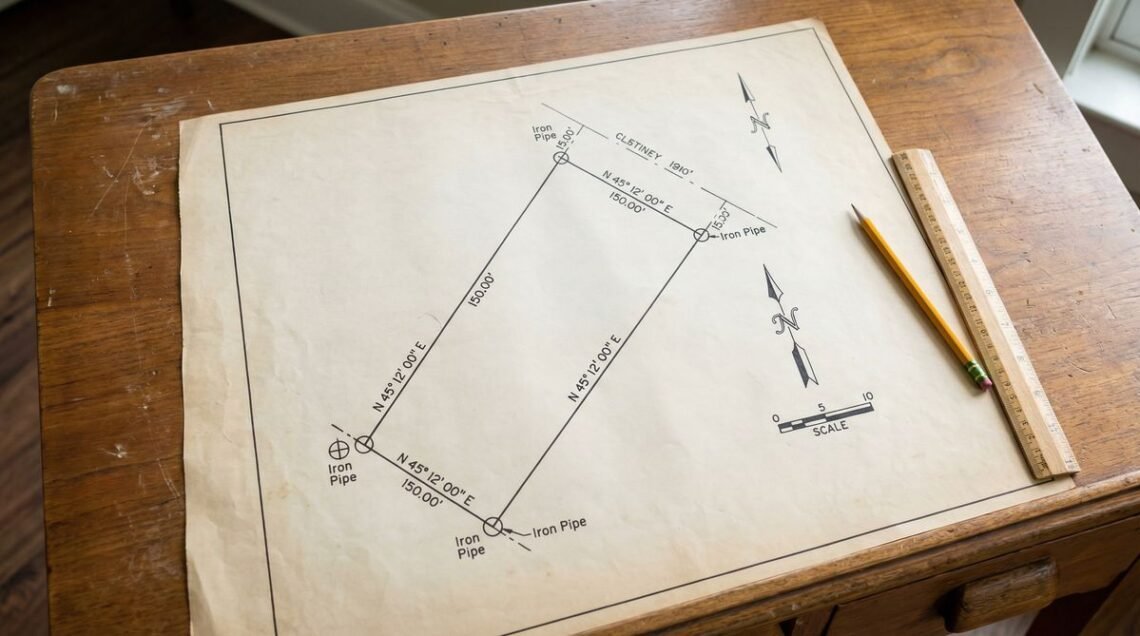
A property survey is one of the most important documents a homeowner or buyer will encounter — and one of the least understood. Filled with bearings, distances, symbols, and legal language, a survey plat can look like a foreign language to anyone who has not been trained to read one. Yet the information it contains is fundamental: it defines exactly where your property begins and ends, what encumbrances exist on it, and what rights others may have over it, notes Spectrum Realty Management experts.
Learning how to read a property survey does not require a surveying license. It requires knowing what to look for and what each element means. This guide breaks down the key components of a property survey and explains how to interpret them accurately.
What Is a Property Survey?
A property survey is a legal document prepared by a licensed land surveyor that precisely defines the boundaries, dimensions, and physical features of a parcel of land. It translates the property’s legal description into a scaled graphic map — called a plat — that shows boundary lines, corner monuments, easements, and encroachments.
Property surveys are used in real estate transactions, construction permitting, boundary dispute resolution, and title insurance. Lenders and title companies typically require a current survey before closing on a property to confirm that the land being purchased matches its legal description and that no undisclosed encroachments or easements exist.
The most common type for residential real estate is the ALTA/NSPS Land Title Survey, which meets standards jointly established by the American Land Title Association and the National Society of Professional Surveyors. Simpler boundary surveys are also common for routine transactions.
Key Components of a Property Survey
Every property survey contains a set of standardized components: a title block identifying the surveyor and date, a legend explaining symbols, a north arrow and scale, boundary lines with bearings and distances, corner monuments, and notations for easements and encroachments. Understanding each component is the foundation of reading a survey correctly.
Title Block
Located in a corner of the plat, the title block identifies the licensed surveyor or firm, the date the survey was conducted, the property address, and the drawing scale. Always check the date — surveys can become outdated as property conditions and regulations change. A survey more than five to ten years old may not reflect current encroachments or improvements.
Legend
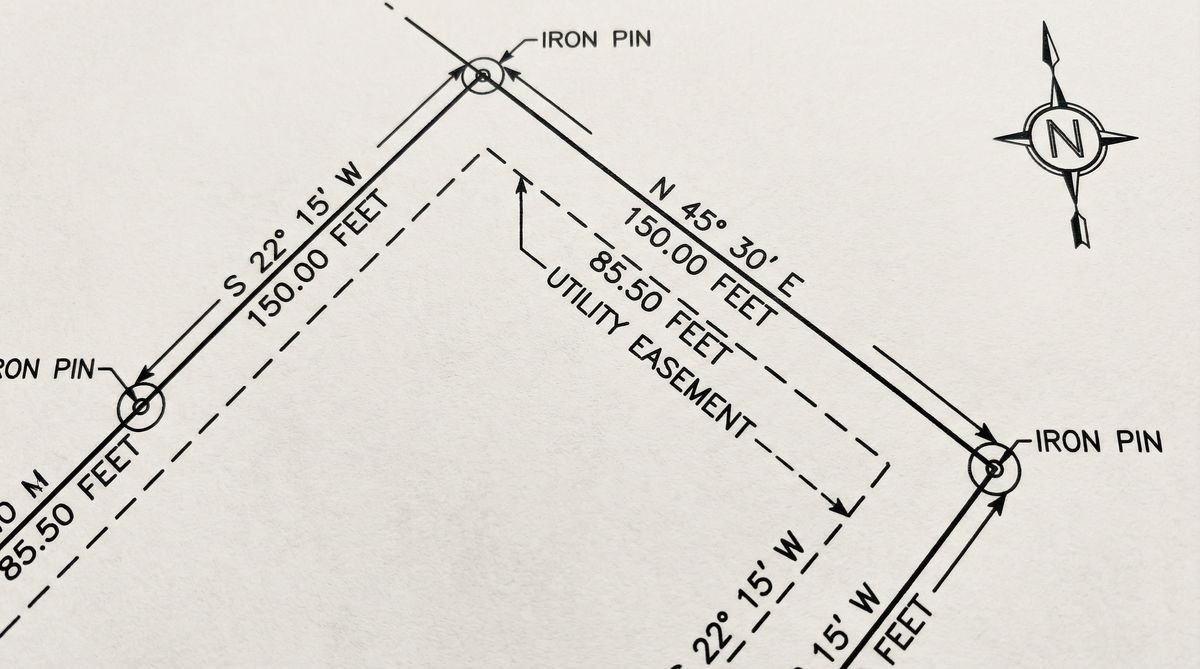
The legend decodes the symbols, line types, and abbreviations used throughout the plat. Common notations include IPF (iron pin found), IPS (iron pin set), MON (monument), and various line styles that distinguish boundary lines from easement lines or setback lines. Never attempt to interpret a survey without first consulting the legend.
North Arrow and Scale
The north arrow establishes orientation. Most surveys use true north or magnetic north, and the plat will specify which. The scale (for example, 1 inch = 30 feet) allows the reader to measure distances on the drawing and convert them to real-world dimensions. Use a ruler against the scale bar to verify distances when needed.
Reading Boundary Lines and Bearings
Property boundaries are described using a system of bearings and distances. A bearing expresses the direction of a boundary line as an angle measured from north or south toward east or west (for example, N 45° 30′ E). The distance following the bearing gives the length of that line in feet. Reading each boundary segment in sequence traces the full perimeter of the property.
The boundary description always begins at a defined starting point called the Point of Beginning (POB). From there, each line is described by its bearing and distance until the description returns to the POB, “closing” the boundary. If the survey does not close — meaning the final line does not return precisely to the starting point — it may indicate an error that requires correction.
On the plat, boundary lines are typically shown as solid lines with the bearing and distance labeled alongside each segment. Interior lines, such as those separating easement areas from the main parcel, are usually shown as dashed or dotted lines.
Understanding Easements and Encroachments
Easements are legal rights that allow a third party to use a portion of the property for a specific purpose — such as a utility company’s right to access underground lines or a neighbor’s right to use a shared driveway. Encroachments occur when a structure or improvement crosses a property boundary. Both are shown on the survey and have significant implications for property use and value.
Easements are typically shown as shaded or hatched areas on the plat, with a notation identifying the type and beneficiary (for example, “15′ Utility Easement — Electric Company”). Easements run with the land, meaning they remain in place regardless of who owns the property. Buyers should review all easements carefully before closing, as they can restrict construction, landscaping, and other uses of the affected area.
Encroachments — such as a fence, driveway, or building that crosses onto an adjacent property — are noted on the survey with a description of what is encroaching and from which direction. An encroachment can complicate title insurance, affect financing, and create legal liability if not resolved before closing.
Locating Corner Monuments
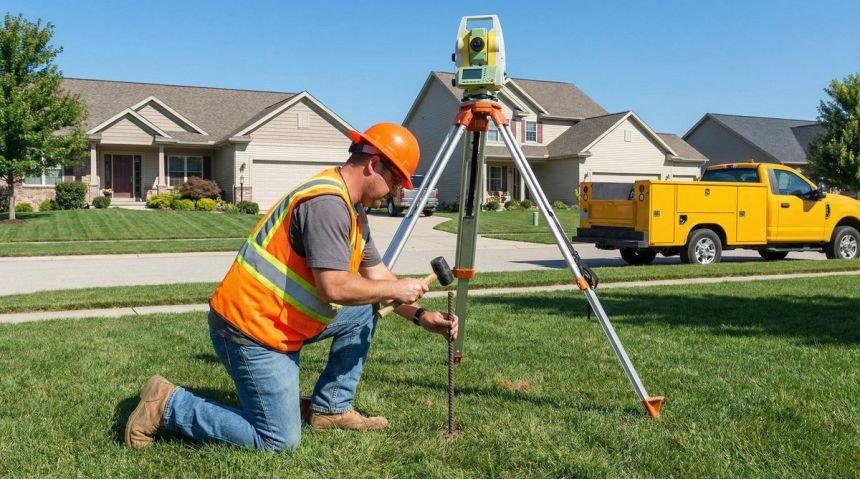
Corner monuments are the physical markers placed by the surveyor to mark the exact corners of the property on the ground. They are typically iron pins, rods, or concrete monuments, and their locations are shown on the plat. Finding these markers on the actual property allows the owner to physically identify their boundary lines.
The survey will note whether each monument was found (IPF) or newly set (IPS) during the survey. If a monument is missing or disturbed, the survey will typically note this and may provide a calculated position. Homeowners can locate buried iron pins using a metal detector. Never remove or relocate a corner monument — doing so is illegal in most jurisdictions and can create serious legal complications.
Frequently Asked Questions
What is the difference between a survey and a plat?
A survey is the process of measuring and documenting the land, while a plat is the map or drawing produced from that survey. The plat is the document most people refer to when they say “property survey.” Plats are often recorded with local government agencies, making them public legal documents.
How do I find my property lines using a survey?
Orient the plat using the north arrow, then locate the Point of Beginning. Follow each bearing and distance in sequence to trace the boundary. On the ground, look for the corner monuments (iron pins or concrete markers) referenced in the survey. A metal detector can help locate buried pins.
Can I use an old survey for a building permit?
It depends on local regulations. Many jurisdictions require a survey completed within the past five to ten years for building permit applications. An outdated survey may not reflect current improvements, encroachments, or zoning changes. Always verify requirements with the local planning or building department before proceeding.
Why are two distances listed for one boundary line?
Two distances on a single boundary line indicate a discrepancy between the record distance (from the deed or prior documents) and the measured distance (from the current survey). Small differences are common due to historical measurement variations. Significant discrepancies may require further investigation or legal resolution.
What should I do if the survey shows an encroachment?
An encroachment should be addressed before closing. Options include negotiating a boundary line agreement with the neighboring property owner, obtaining a quitclaim deed for the encroaching area, or requiring the encroaching structure to be removed. A real estate attorney can advise on the most appropriate resolution based on the specific situation.
Conclusion
Reading a property survey is a skill that pays dividends throughout the life of a property. Whether reviewing a survey before purchase, planning a renovation, or resolving a boundary question, understanding the plat’s components — bearings, distances, monuments, easements, and encroachments — transforms a technical document into a clear picture of what is owned and what rights exist. When in doubt, a licensed surveyor or real estate attorney can provide guidance, but the ability to read the basic elements independently is a valuable tool for any property owner.
- National Society of Professional Surveyors (NSPS). Understanding Land Surveys. nsps.us.com
- American Land Title Association (ALTA). ALTA/NSPS Land Title Survey Standards. alta.org
- U.S. Geological Survey (USGS). National Map and Parcel Data. usgs.gov

- I’m Aliza, the founder of Urdu Novel Bank. I built this site because I love Urdu stories and want everyone to enjoy them. As an Urdu literature lover, I choose the best novels to share with you. Here you can find free Urdu novels in romance, mystery, thriller and more. Read online or download PDF chapters without signing up. I update the library often so you’ll always have new tales to explore. My goal is to bring Urdu literature to readers around the world.