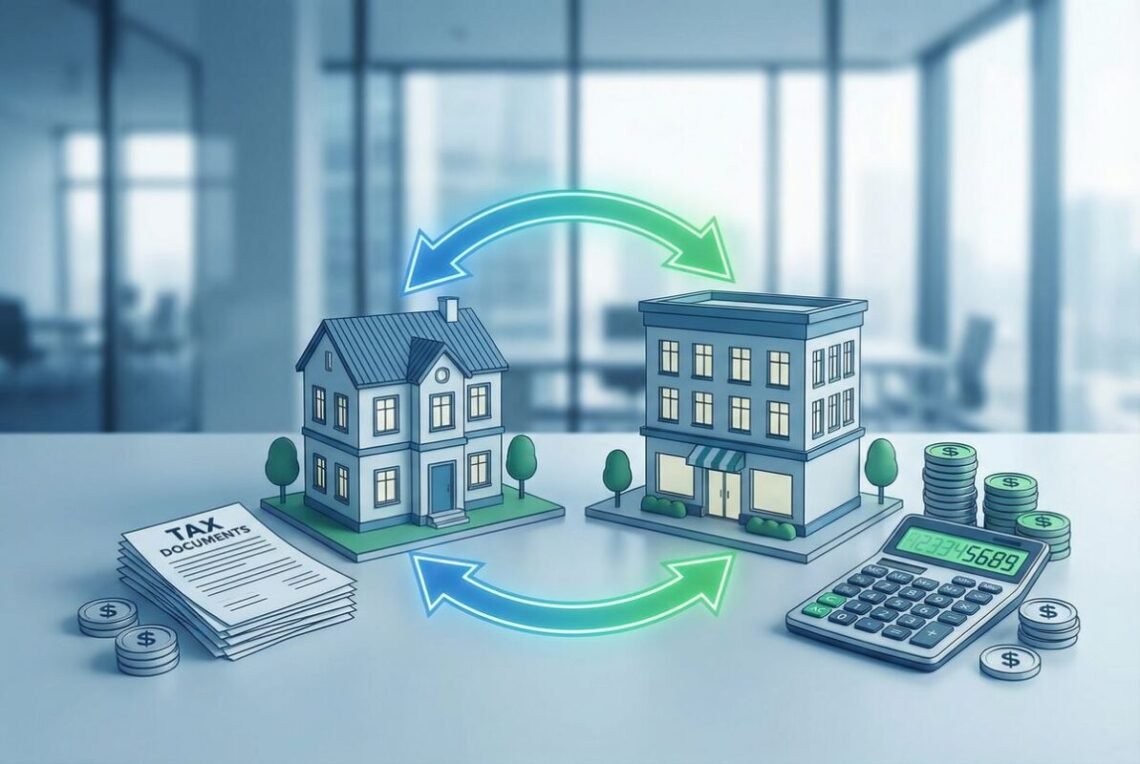
Most real estate investors know that selling a property triggers a tax bill. What fewer realize is that there is a legal way to defer that bill — sometimes indefinitely, notes Property Management Southlake TX. A 1031 exchange, named after Section 1031 of the Internal Revenue Code, allows you to sell an investment property and roll the proceeds into a replacement property without immediately paying capital gains taxes. Done correctly, it is one of the most powerful wealth-building tools available in real estate.
How a 1031 Exchange Works
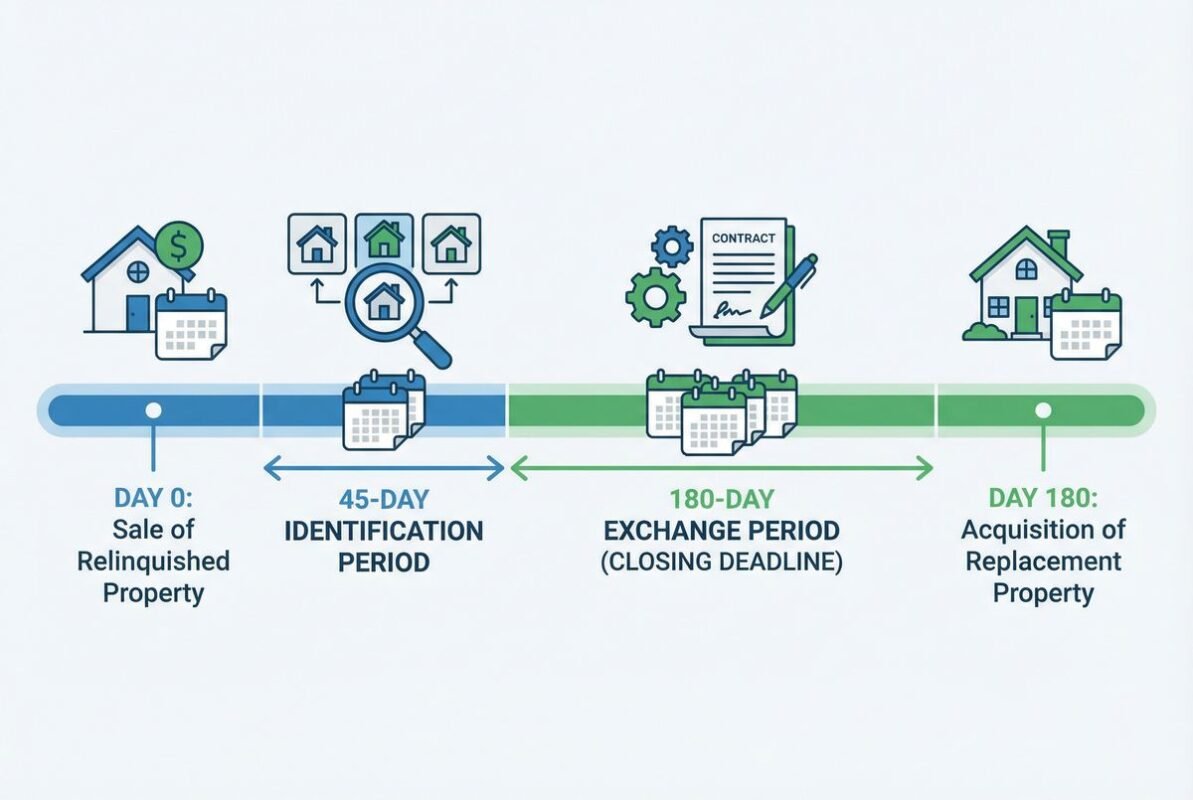
The mechanics are straightforward in concept, strict in execution. When you sell your relinquished property, the proceeds must go directly to a Qualified Intermediary (QI) — a neutral third party who holds the funds during the exchange. You cannot touch the money. From the closing date of the sale, two hard deadlines begin running simultaneously.
- 45-day identification window: You must identify potential replacement properties in writing within 45 calendar days.
- 180-day closing deadline: You must close on one or more of those identified properties within 180 calendar days of the original sale.
Both deadlines are absolute. No extensions are granted for weekends, holidays, or market delays. Missing either deadline disqualifies the exchange and triggers an immediate tax liability on the full gain.
Key Rules and Requirements
| Rule | Requirement | Notes |
|---|---|---|
| Like-Kind Property | Both properties must be held for investment or business use | Residential-to-commercial swaps qualify; personal residences do not |
| Equal or Greater Value | Replacement property must be equal to or greater in value | Any “boot” (cash or lesser value received) is taxable |
| Qualified Intermediary | A neutral QI must hold all proceeds | Using an attorney or accountant with a prior relationship may disqualify |
| Identification Limit | Up to 3 properties (Three-Property Rule) or unlimited if total value ≤ 200% of relinquished property | Most investors use the Three-Property Rule for simplicity |
| Title Continuity | Same taxpayer must appear on both deeds | Changing entity structure mid-exchange can void the exchange |
Benefits of a 1031 Exchange
The primary benefit is tax deferral — not elimination, but deferral. That distinction matters. Every dollar that would have gone to taxes stays in your investment, compounding over time. Investors use 1031 exchanges to upgrade to larger properties, diversify across markets or asset classes, consolidate multiple properties into one, and reposition portfolios without triggering a tax event at each step.
There is also a powerful estate planning angle. If an investor holds exchanged properties until death, heirs receive a stepped-up basis, which effectively erases the accumulated deferred gain. The tax that was deferred for decades disappears entirely at that point.
Common Misconceptions — Myth vs. Reality
Myth: A 1031 exchange eliminates capital gains taxes.
Reality: It defers them. If you eventually sell without another exchange, all accumulated gains become taxable at that point. The strategy works best as part of a long-term hold-and-exchange plan, not a one-time workaround.
Myth: You must swap one property for exactly one other.
Reality: You can exchange one property for multiple replacements, or multiple properties for one, as long as value and equity requirements are satisfied. Flexibility is built into the rules.
Myth: Any property qualifies.
Reality: Personal residences, vacation homes used primarily for personal use, and properties purchased specifically to flip are excluded. The property must be held for investment or productive business use on both sides of the exchange.

Potential Pitfalls to Watch
The most common failure point is the timeline. Investors underestimate how quickly 45 days passes, especially when replacement inventory is tight. Starting your property search before the sale closes — not after — is essential. Choosing the wrong QI is another risk. The QI holds significant funds and must be financially sound and experienced. There is no federal licensing requirement for QIs, so due diligence on their background and bonding is critical.
Finally, watch for “boot.” If the replacement property is worth less than the relinquished property, or if you receive any cash back, that amount is taxable even within an otherwise valid exchange. Careful structuring with a tax advisor prevents unintended boot scenarios.
Frequently Asked Questions
What does “like-kind” mean in a 1031 exchange?
In real estate, “like-kind” is broadly defined — any investment property can be exchanged for any other investment property. A single-family rental can be exchanged for an apartment building, raw land, or a commercial warehouse.
Can I do a 1031 exchange on a vacation home?
Possibly, but only if the vacation home has been rented out and used as an investment property for at least two years prior to the exchange, meeting IRS safe harbor guidelines.
What happens if I miss the 45-day deadline?
The exchange is disqualified. The full capital gain from the sale becomes taxable in that tax year, with no exceptions or extensions available.
Do I need a Qualified Intermediary for every 1031 exchange?
Yes. The IRS requires that a QI hold the proceeds. If you receive the funds directly — even briefly — the exchange is void and taxes are owed immediately.
Can I use a 1031 exchange for my primary residence?
No. Primary residences do not qualify. However, if you convert a rental property to a primary residence and live there for at least two years, you may later sell using the primary residence capital gains exclusion instead.
Is there a minimum or maximum property value for a 1031 exchange?
There is no minimum or maximum set by the IRS. The exchange must simply meet the like-kind, timeline, and value requirements regardless of the dollar amount involved.
What is “boot” in a 1031 exchange?
Boot refers to any non-like-kind property received in the exchange — typically cash or debt relief. Boot is taxable even if the rest of the exchange qualifies, so most investors structure deals to avoid receiving any boot.
Conclusion
A 1031 exchange is not a loophole — it is a deliberate provision in the tax code designed to encourage continued investment in real estate. Used strategically, it allows investors to grow portfolios, defer taxes, and build generational wealth without being forced to cash out at each step. The rules are strict, the timelines are unforgiving, and the QI selection matters enormously. But for investors who plan carefully and work with experienced advisors, the 1031 exchange remains one of the most valuable tools in real estate.

- I’m Aliza, the founder of Urdu Novel Bank. I built this site because I love Urdu stories and want everyone to enjoy them. As an Urdu literature lover, I choose the best novels to share with you. Here you can find free Urdu novels in romance, mystery, thriller and more. Read online or download PDF chapters without signing up. I update the library often so you’ll always have new tales to explore. My goal is to bring Urdu literature to readers around the world.
Latest Novels
- July 29, 2026Home ImprovementCabinet Painting Cost Per Linear Foot: Complete Pricing Guide for Kitchens
- May 4, 2026Urdu Romantic NovelsHow Incorporating Moroccan Tile Enhances Your Home Décor
- April 29, 2026Home ImprovementHow Finding a Reliable Plumber Near Me Transforms Plumbing Emergencies
- April 27, 2026Home ImprovementHow to Plan a Layered Lighting Scheme for Your Bedroom Renovation