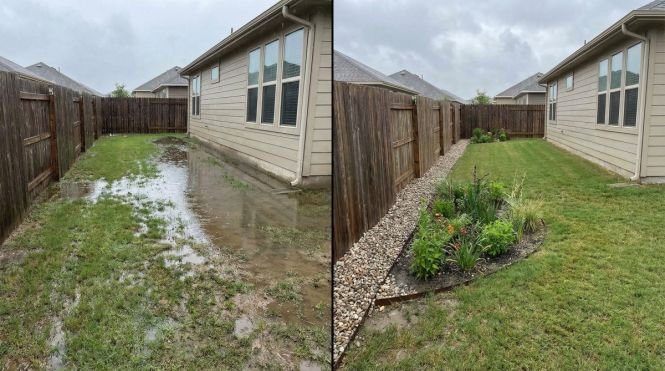
To stop water pooling in your backyard, you must identify the cause of the accumulation and implement a drainage solution such as a French drain, catch basin, or soil aeration. These methods work by either redirecting surface runoff to a lower discharge point or improving the soil’s natural ability to absorb moisture. Addressing these issues promptly prevents long-term damage to your home’s foundation and maintains the health of your landscape.
Identifying the causes of backyard water pooling
Before implementing a solution, it is essential to understand why water is accumulating in specific areas of your yard. Common causes include soil compaction, improper grading, and high water tables. Soil compaction occurs when heavy foot traffic or machinery compresses the earth, leaving no room for water to percolate. This is particularly common in areas with high clay content, which naturally resists drainage. Improper grading refers to the slope of your land; if the ground does not slope away from your home at a minimum of one inch per foot for the first six to ten feet, water will naturally settle in low spots or against your foundation.
Another factor is the presence of non-porous surfaces such as concrete patios or asphalt driveways. These surfaces prevent water from entering the ground, forcing it to run off into adjacent lawn areas. If these areas are already saturated or compacted, the runoff has nowhere to go, resulting in standing water. Environmental factors, such as intense rainfall or melting snow, can also overwhelm even well-designed landscapes if the underlying drainage infrastructure is insufficient.
Effective drainage solutions for standing water
Several technical solutions exist to manage and redirect excess water. The choice of system depends on whether the problem is surface water or subsurface groundwater. For surface water that pools after rain, a catch basin is often the most effective choice. This system uses a grate-covered basin to collect runoff, which is then channeled through solid PVC pipes to a municipal storm drain or a lower part of the property. Catch basins are ideal for low spots in the yard or near downspouts where large volumes of water collect quickly.
Comparing common backyard drainage systems
Choosing between different drainage systems requires an understanding of their specific applications and maintenance requirements. The following table compares the most common methods used in residential landscaping.
| System Type | Primary Function | Best For | Maintenance Level |
|---|---|---|---|
| French Drain | Subsurface water removal | Soggy lawns and foundation protection | Moderate (periodic flushing) |
| Catch Basin | Surface runoff collection | Low spots and downspout management | High (clearing debris from grates) |
| Dry Well | On-site water infiltration | Areas with no municipal drain access | Low (requires clear filters) |
| Swale | Surface water redirection | Large properties with natural slopes | Low (mowing and debris removal) |
Improving soil health and permeability
In many cases, water pooling is a symptom of poor soil structure rather than a lack of drainage pipes. Aeration is a highly effective method for improving the soil’s natural permeability. By removing small plugs of soil, aeration reduces compaction and allows oxygen, nutrients, and water to reach the root zone. For lawns with heavy clay soil, annual aeration is recommended to maintain a healthy drainage rate. This process is most effective when performed during the growing season when the grass can quickly recover and fill the aeration holes.
In addition to aeration, incorporating organic matter such as compost can improve soil structure over time. Compost introduces beneficial microbes and earthworms that naturally loosen the soil, creating a more porous environment. For smaller low spots, a technique called top-dressing—applying a thin layer of sand and compost mix—can help level the ground while simultaneously improving drainage. This approach is less invasive than regrading and can be done as part of regular lawn maintenance.
Landscaping techniques for water management
Strategic landscaping can serve as a natural alternative to mechanical drainage systems. A rain garden is a popular solution that utilizes a shallow depression planted with deep-rooted native species. These gardens are designed to capture and soak up runoff, filtering pollutants before the water reaches the groundwater table. Rain gardens are not only functional but also add aesthetic value and support local biodiversity. They are particularly effective when placed at the end of a swale or near downspout extensions.
Another landscaping approach is the use of permeable materials for hardscapes. Instead of traditional concrete, homeowners can install permeable pavers, gravel, or porous asphalt for walkways and patios. These materials allow water to pass through the surface and into a stone reservoir below, where it slowly infiltrates the soil. This reduces the total volume of runoff generated by the property and prevents the “sheeting” effect that often leads to pooling in adjacent lawn areas.
Professional regrading and foundation protection
When water pools consistently against a home’s foundation, professional regrading may be necessary. This process involves reshaping the land to ensure a consistent downward slope away from the structure. According to industry standards, a slope of at least 5% (six inches of drop over the first ten feet) is ideal for protecting foundations from hydrostatic pressure and water intrusion. Regrading often requires heavy machinery and a thorough understanding of the property’s overall topography to avoid shifting the problem to a neighbor’s yard.
Protecting the foundation also involves managing roof runoff. Downspouts should be extended at least five to ten feet away from the house, or connected directly to an underground drainage system. If the soil near the foundation has settled over time—a common issue in newer homes—filling these “settlement zones” with compacted clay soil can prevent water from tracking down the foundation wall. Ensuring that gutters are clean and properly pitched is the first line of defense in any comprehensive water management strategy.
Frequently Asked Questions
How long does it take for a French drain to start working?
A French drain begins working immediately after installation. As soon as the surrounding soil becomes saturated, water will naturally follow the path of least resistance through the gravel and into the perforated pipe. You should notice a significant reduction in standing water after the first heavy rainfall following the installation.
Can I use a French drain without a discharge point?
No, a French drain must have a designated discharge point to be effective. Without an outlet, the water will simply collect in the pipe and eventually back up into the soil. Common discharge points include municipal storm drains, dry wells, or a lower area of the property where the water can safely disperse without causing erosion.
Will planting trees help stop water pooling?
While trees can absorb significant amounts of water, they are rarely a complete solution for severe pooling. Certain species, such as willows or river birches, are more water-tolerant and can help manage moisture in damp areas. However, for large volumes of runoff or structural grading issues, mechanical drainage systems are usually required.
How often should I clean my catch basin?
Catch basins should be inspected at least twice a year, typically in the spring and fall. Debris such as leaves, silt, and trash can accumulate in the basin and block the outlet pipe. Regular cleaning ensures the system remains functional during heavy rain events and prevents the buildup of stagnant water, which can attract pests.
Is it legal to drain water onto a neighbor’s property?
In most jurisdictions, it is illegal to redirect water in a way that causes damage or significant runoff onto a neighboring property. When installing drainage systems, you must ensure that the water is discharged into a legal outlet, such as a storm sewer or a natural watercourse, or managed entirely within your own property boundaries.
Does aeration work for all types of soil?
Aeration is most beneficial for heavy clay or highly compacted soils. While it can be performed on sandy soils, the benefits are less pronounced because sandy soil is naturally porous. For homeowners with severe compaction, core aeration—which removes physical plugs of soil—is more effective than spike aeration, which can sometimes increase compaction around the holes.

- I’m Aliza, the founder of Urdu Novel Bank. I built this site because I love Urdu stories and want everyone to enjoy them. As an Urdu literature lover, I choose the best novels to share with you. Here you can find free Urdu novels in romance, mystery, thriller and more. Read online or download PDF chapters without signing up. I update the library often so you’ll always have new tales to explore. My goal is to bring Urdu literature to readers around the world.