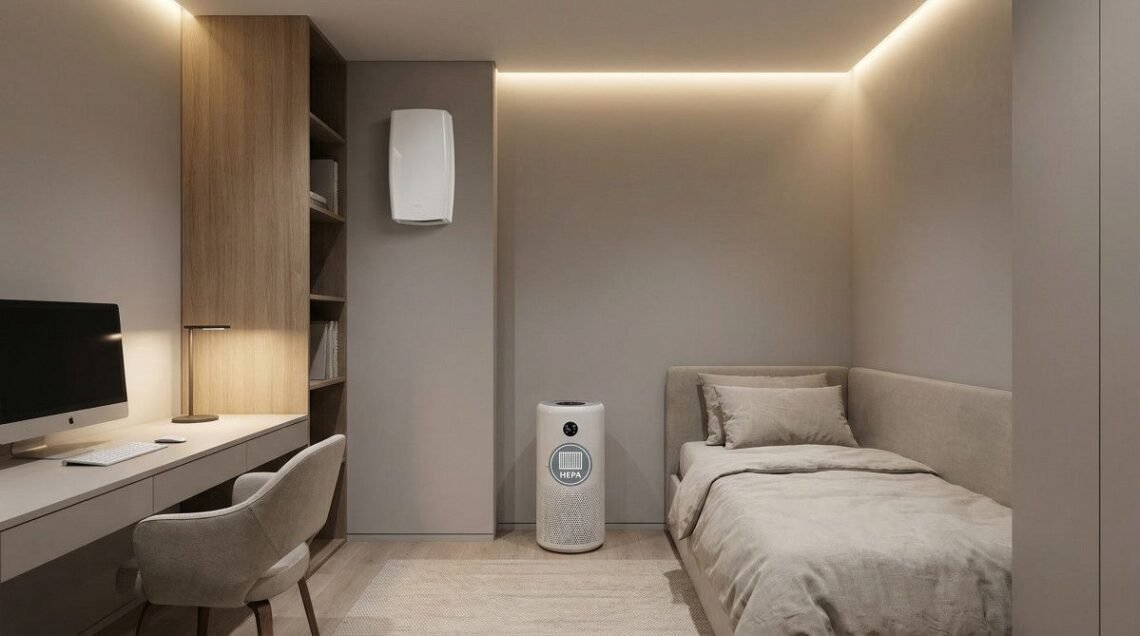
Improving ventilation in a room with no windows requires a combination of mechanical air exchange, strategic air circulation, and moisture control to ensure a healthy indoor environment. By utilizing exhaust fans, air purifiers, and existing HVAC systems, occupants can effectively replace stale air with fresh air even in completely enclosed spaces. This proactive approach prevents the buildup of carbon dioxide and volatile organic compounds that typically accumulate in windowless areas.
Understanding the Challenges of Windowless Ventilation
A room without windows lacks the natural ability to perform passive air exchange, which often leads to the accumulation of carbon dioxide, volatile organic compounds (VOCs), and excess humidity. Without a direct path for outdoor air to enter or indoor air to escape, these pollutants remain trapped, potentially causing stuffiness or even mold growth over time. The Environmental Protection Agency (EPA) states that indoor air can be significantly more polluted than outdoor air, making active ventilation essential for health and comfort.
To address these issues, homeowners must transition from relying on natural ventilation to implementing mechanical or hybrid solutions. These methods focus on either moving air within the space to prevent stagnation or physically removing old air and replacing it with filtered air from adjacent rooms or the outdoors. Consistent air movement is the primary defense against the negative effects of poor indoor air quality in windowless environments.
Implementing Mechanical Ventilation Solutions
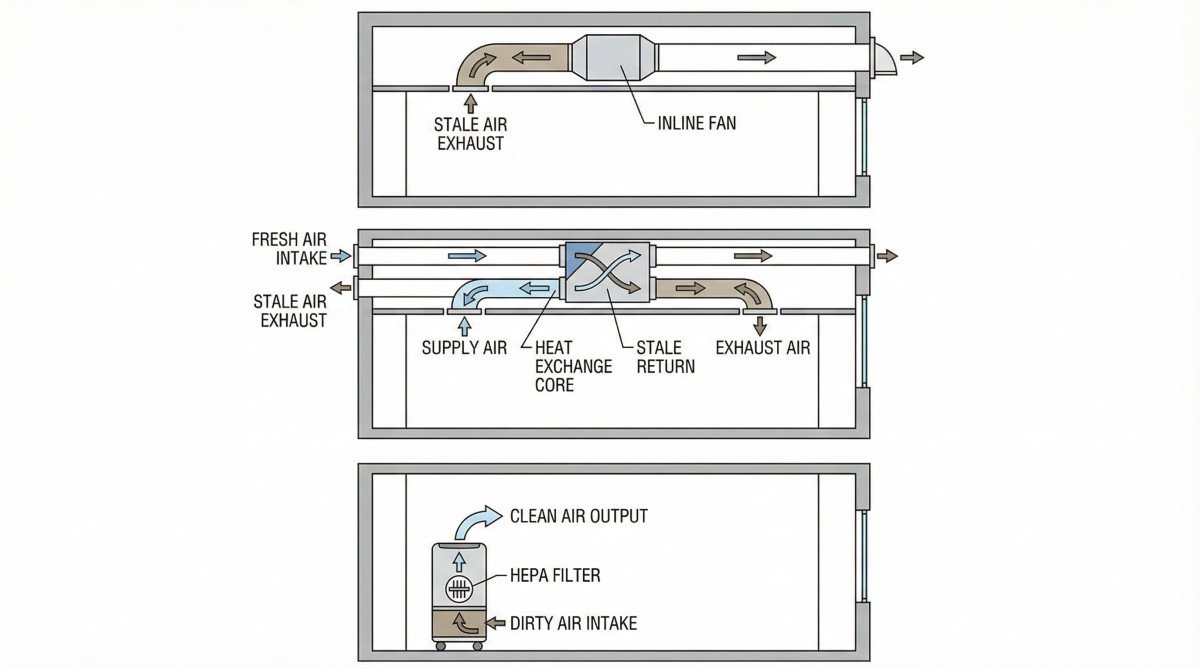
Mechanical ventilation is the most reliable way to ensure consistent air exchange in a windowless room. This typically involves the installation of exhaust fans or more advanced energy recovery ventilators (ERVs). Exhaust fans, commonly found in bathrooms and kitchens, work by creating a slight negative pressure that pulls air out of the room through a dedicated duct. This forced air movement ensures that stale air is physically removed from the space rather than just recirculated.
For a more balanced approach, an ERV or Heat Recovery Ventilator (HRV) can be installed to both exhaust stale air and supply fresh, pre-conditioned air simultaneously. These systems are highly efficient as they transfer heat or moisture between the outgoing and incoming air streams, maintaining the room’s temperature while improving air quality. While these systems require professional installation, they provide the most comprehensive solution for long-term air quality management.
Maximizing Air Circulation with Fans
While fans do not technically ventilate by adding fresh air, they are critical for preventing air from becoming stagnant. In a windowless room, a fan should be positioned to move air toward or away from an open door. Placing a pedestal fan or box fan in the doorway, facing into the room, can help push fresh air from a ventilated hallway into the enclosed space. This creates a simple but effective air exchange loop that mimics natural cross-ventilation.
Alternatively, ceiling fans can be used to create a constant downdraft, which helps distribute air more evenly throughout the room. This is particularly effective when used in conjunction with an open door or a nearby HVAC vent, as it ensures that the fresh air reaching the room is not just sitting in one corner. Using multiple fans at different heights can further enhance this effect by breaking up pockets of still air.
Utilizing Existing HVAC Systems
If the windowless room is already connected to a central heating and cooling system, the HVAC unit can serve as a powerful ventilation tool. Most thermostats have a fan setting that can be switched from auto to on. This keeps the system’s blower running continuously, even when the heating or cooling is not active, ensuring a steady flow of filtered air through the room’s supply vents. This method leverages existing infrastructure to maintain air movement without additional equipment.
It is also important to ensure that the return air vents are not blocked by furniture or decor. Clear pathways allow the HVAC system to pull air out of the room efficiently, completing the circulation loop. Regular maintenance, such as changing filters every three months, is necessary to keep the air clean and the system running at peak performance. High-efficiency filters can also help capture smaller particles that might otherwise linger in a windowless space.
Comparing Ventilation Methods for Windowless Rooms
Choosing the right method depends on the room’s usage, budget, and existing infrastructure. The following table compares common strategies based on their effectiveness and installation requirements to help determine the best fit for specific needs.
| Method | Ventilation Type | Effectiveness | Installation Effort |
|---|---|---|---|
| Exhaust Fans | Mechanical | High | Moderate |
| ERV/HRV Systems | Balanced | Very High | High |
| Portable Fans | Circulation | Low | Minimal |
| Passive Vents | Natural/Passive | Moderate | Moderate |
| Air Purifiers | Treatment | Moderate (Quality) | Minimal |
Managing Humidity and Air Quality
In windowless spaces, humidity can quickly become a problem, especially if the room is used for sleeping or exercise. High humidity levels can lead to condensation on walls and the eventual growth of mold. Using a dehumidifier can help maintain relative humidity levels between 30 percent and 50 percent, which is the range recommended by the EPA for optimal indoor health. Controlling moisture is just as important as moving air when it comes to maintaining a safe environment.
Air purifiers equipped with HEPA filters are another valuable addition. While they do not provide fresh oxygen, they are highly effective at removing dust, pollen, and other particulates from the air. For windowless rooms, look for models that also include an activated carbon filter to help neutralize odors and VOCs that might otherwise linger in the stagnant air. These devices work best when placed in areas with high air movement to maximize the volume of air processed.
Can indoor plants provide enough oxygen for a windowless room?
While plants do produce oxygen through photosynthesis, they do not produce enough to significantly impact the air quality or oxygen levels in a standard-sized room. They are better suited for aesthetic purposes and minor VOC reduction rather than as a primary ventilation source. Relying solely on plants for air exchange is not a recommended strategy for windowless spaces.
Is it safe to sleep in a room with no windows?
Yes, it is safe to sleep in a windowless room provided there is some form of air exchange, such as an open door or a functioning HVAC vent. Without any air movement, carbon dioxide levels can rise, leading to poor sleep quality or headaches. Ensuring at least one active method of air circulation is present will maintain a safe sleeping environment.
How do I stop a windowless room from smelling musty?
Musty smells are usually caused by stagnant air and high humidity. To eliminate these odors, use a dehumidifier to keep the air dry and an air purifier with a carbon filter to remove scent particles. Ensuring regular air circulation with a fan will also help prevent the buildup of odors by constantly refreshing the air volume.
What is the best fan placement for a room with no windows?
The most effective placement is in the doorway. A fan facing into the room will pull in fresh air from the rest of the house, while a fan facing out will help exhaust stale air. Using two fans—one for intake and one for exhaust—can create a more powerful cross-breeze that significantly improves the rate of air exchange.
Do air purifiers replace the need for ventilation?
No, air purifiers do not replace ventilation. Purifiers clean the existing air by removing particles, but they do not add fresh oxygen or remove carbon dioxide. For a healthy environment, you still need a way to exchange indoor air with fresh outdoor air through mechanical or passive means.
Can I install a vent in a room with no windows?
Yes, you can install passive vents, such as door grilles or through-wall vents, to allow air to flow between rooms. For more significant results, a mechanical exhaust vent can be installed and ducted to the exterior of the building. This provides a dedicated path for air removal that does not rely on open doors.

- I’m Aliza, the founder of Urdu Novel Bank. I built this site because I love Urdu stories and want everyone to enjoy them. As an Urdu literature lover, I choose the best novels to share with you. Here you can find free Urdu novels in romance, mystery, thriller and more. Read online or download PDF chapters without signing up. I update the library often so you’ll always have new tales to explore. My goal is to bring Urdu literature to readers around the world.
Latest Novels
- April 10, 2026Fashion & BeautyBeauty Shortcuts That Actually Deliver Lasting Results
- April 8, 2026AutoUpgrading Your 4WD for the Ultimate Off-Road Touring Lifestyle
- April 6, 2026Home ImprovementHow to stop drafts coming through windows
- April 5, 2026Home ImprovementWallpaper vs Paint Which Is Better for Living Room