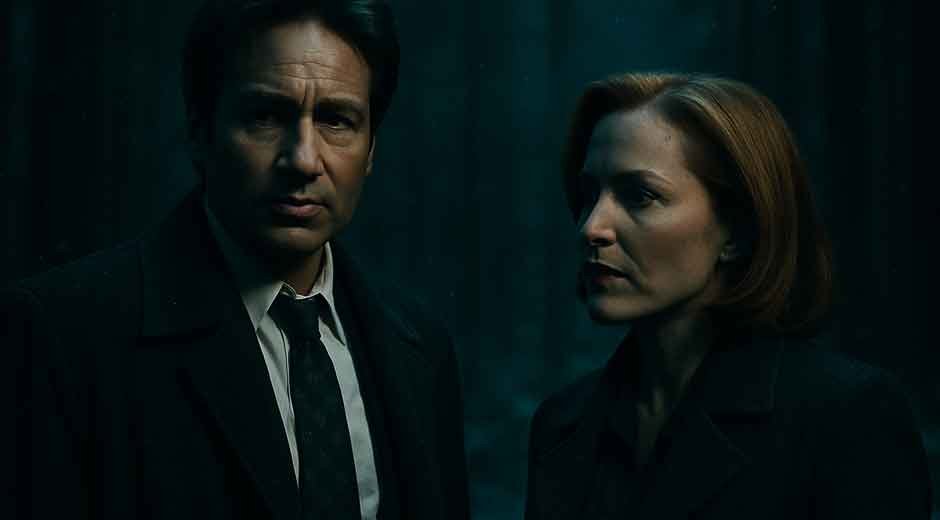
Is the truth still out there, or has it simply retreated into the shadows of personal conviction? That is the profound, almost haunting question at the heart of the 2008 cinematic return of Mulder and Scully in the film The X-Files: I Want to Believe.
After spending years chasing down vast alien conspiracies and shadowy government cover-ups, the second feature film surprised many by offering a far more intimate and grounded mystery. It deliberately shifted the focus from global, existential stakes to the deeply personal, internal battle between faith and cold, hard reason.
For many fans, this narrative choice was a deliberate, and often divisive, move. It essentially stripped away the familiar mythology that had long defined the series, instead presenting a standalone case that felt much more like one of the show’s classic “Monster-of-the-Week” episodes.
The film challenged its audience to look past the need for spectacle and instead engage with the core philosophical conflict that made the original series so compelling in the first place.
Returning to the Familiar: A Standalone Mystery
The decision to eschew the complex alien mythology was a bold one for a major motion picture. Instead of a world-ending threat, the plot centers on the disappearance of an FBI agent and the subsequent investigation, which is aided by a controversial figure: a former priest and convicted pedophile who claims to be receiving psychic visions.
This grounded approach allowed the filmmakers to explore a darker, more psychological thriller tone. The case itself involves disturbing elements of medical horror and human experimentation, a far cry from the vast, cosmic scope of the first film.
The film’s atmosphere is thick with quiet desperation, set against cold, isolated landscapes that perfectly mirror the internal states of its protagonists. It’s a mystery that demands a slow, methodical unraveling, one that relies heavily on character tension rather than the kind of explosive action sequences typical of a summer blockbuster.
Mulder and Scully: The Evolution of a Partnership
When the film begins, Agents Fox Mulder and Dana Scully are no longer part of the FBI. They are living a quiet, domestic life, though their professional paths remain inextricably linked to their core beliefs.
Mulder is living in self-imposed exile, his life still consumed by the pursuit of the paranormal, his famous “I Want to Believe” poster a constant, defiant presence. His belief remains unwavering, even as the world around him seems to have moved on.
Scully, ever the pragmatist, has returned to her medical roots, working as a doctor in a Catholic hospital. Her commitment to science and the tangible world is her anchor, yet her faith, both religious and in Mulder, continues to be tested.
The case forces them back into the uncomfortable orbit of the Bureau, and more importantly, back into their familiar, yet always evolving, dynamic. Theirs is a partnership defined by mutual respect and a constant, loving friction between their fundamentally opposing worldviews.
The Central Conflict: Science vs. Faith
The film’s title is more than a catchphrase; it is the thematic engine of the entire story. The conflict is personified not by aliens, but by the enigmatic Father Joe, whose claims of psychic ability force Scully to confront her own deeply held Catholic faith.
She is a woman of science who believes in God, a paradox that has always been at the heart of her character. Father Joe’s presence challenges her to accept a form of the inexplicable that is rooted in the spiritual, rather than the extraterrestrial.
Conversely, the true antagonists are not supernatural beings, but human monsters who commit horrific acts under the guise of scientific advancement. This juxtaposition cleverly shifts the focus: the real horror is not what is out there, but what people are capable of doing to one another.
Ultimately, the film suggests that “I Want to Believe” is far more than just Mulder’s plea for alien proof. It taps into a universal human desire for meaning—for something that exists beyond the cold, hard facts of a purely scientific world. It is, at its core, a search for hope in the face of overwhelming darkness.
Critical Reception and Legacy
Upon its release, The X-Files: I Want to Believe was met with a mixed response from both critics and the dedicated fanbase. Many felt disappointed that the film did not continue the grand mythology arc, which had been left unresolved by the television series.
The common criticism was that the film felt too much like an extended episode of the show, lacking the blockbuster scale expected of a summer movie. It was perceived as a smaller, more intimate story that failed to deliver the spectacle that audiences had come to anticipate.
However, in the years since its release, the film has gained a reputation as being criminally underrated. Its defenders argue that its strength lies precisely in its restraint and its focus on character development, successfully recapturing the psychological tension of the show’s early seasons.
Ultimately, the film served a crucial role in the franchise’s history. It successfully reunited the core cast and proved that the chemistry between Mulder and Scully was still potent, paving the way for the television revival seasons that would follow.
Conclusion: The Enduring Power of the X-Files
The X-Files: I Want to Believe is a film that demands to be viewed through a specific lens. It is not a grand, sweeping science fiction epic, but a quiet, character-driven thriller that delves into the philosophical heart of the franchise.
Its true success is not measured in box office numbers or critical acclaim, but in its ability to reaffirm the enduring, magnetic power of the Mulder and Scully dynamic. The truth, the film quietly asserts, is often found not in the vastness of space, but in the small, persistent light of human connection and the courage to simply keep searching.

- I’m Aliza, the founder of Urdu Novel Bank. I built this site because I love Urdu stories and want everyone to enjoy them. As an Urdu literature lover, I choose the best novels to share with you. Here you can find free Urdu novels in romance, mystery, thriller and more. Read online or download PDF chapters without signing up. I update the library often so you’ll always have new tales to explore. My goal is to bring Urdu literature to readers around the world.
Latest Novels
- March 31, 2026Home ImprovementEssential Home Upgrades for Better Insulation and Noise Reduction
- March 28, 2026Home ImprovementHow Hiring Professional Charlotte Nc Plumbers Transforms Your Home
- March 27, 2026TravelHow to Manage Your Finances During an International Holiday
- March 26, 2026SportsPractical Nutrition and Fitness Hacks for the Time-Poor Professional