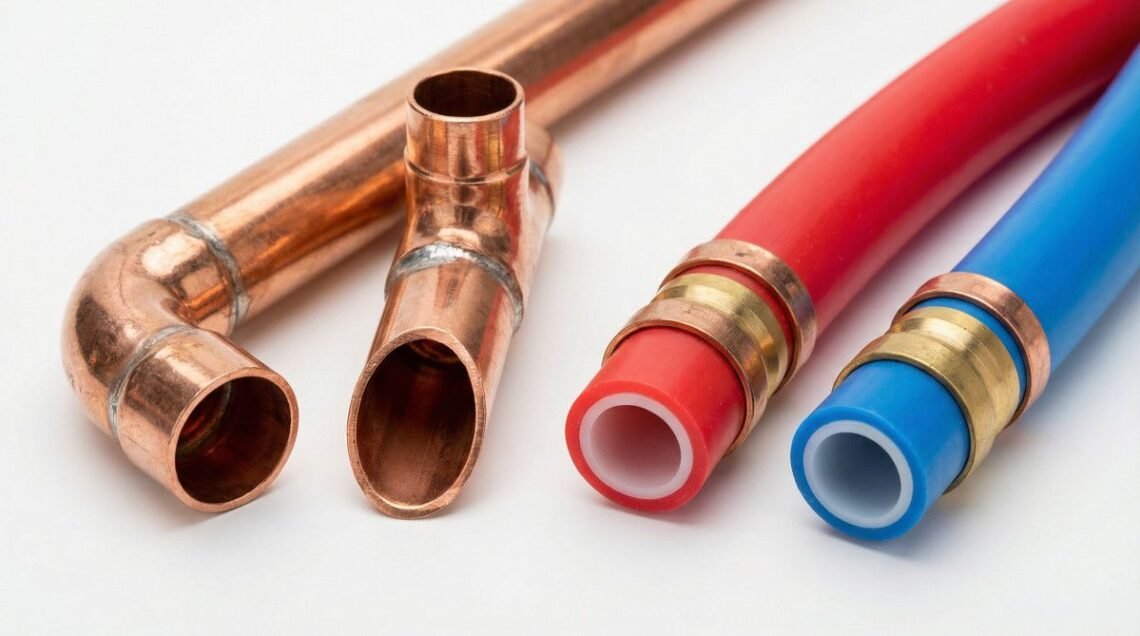
Choosing between copper and PEX pipe for home plumbing depends on your budget, local climate, and long-term durability goals. Copper is a traditional, rigid metal piping known for its extreme longevity of 50 to 70 years and full recyclability, while PEX is a flexible, synthetic alternative that is significantly more affordable, easier to install, and resistant to freezing and corrosion. For most modern residential projects, PEX offers superior cost-efficiency and freeze protection, whereas copper remains the gold standard for high-heat applications and homeowners seeking a permanent, eco-friendly solution.
Understanding the Material Differences
Copper piping has been the industry standard for residential plumbing since the 1960s, replacing older lead and galvanized steel systems. It is a rigid, pure metal that is highly resistant to heat and high pressure. Because it is a natural material, it does not leach synthetic chemicals into the water supply, making it a preferred choice for many health-conscious homeowners. However, its rigidity requires precise cutting and soldering at every joint, which increases labor intensity during installation.
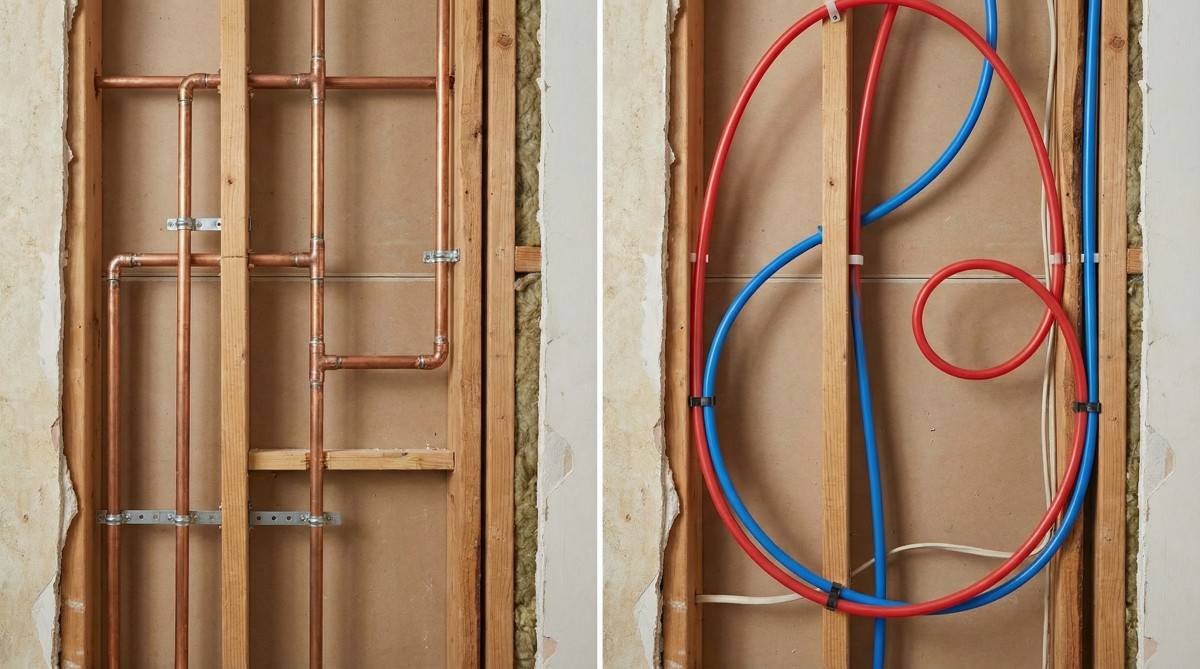
PEX, or cross-linked polyethylene, is a flexible plastic tubing that gained popularity in the 1980s. Unlike copper, PEX can be snaked through walls and around corners without the need for numerous fittings. This flexibility not only speeds up the installation process but also reduces the number of potential leak points in the system. PEX is color-coded—typically red for hot water and blue for cold—making it easy for homeowners and professionals to identify lines within a manifold system.
Cost Analysis and Installation Efficiency
One of the most significant factors in the copper vs PEX debate is the total cost of materials and labor. Copper is a commodity, meaning its price fluctuates based on global market demand. On average, copper piping costs between $2.00 and $8.00 per linear foot. In contrast, PEX is much more stable and affordable, typically ranging from $0.50 to $2.00 per linear foot. When repiping an entire home, the material savings with PEX can amount to thousands of dollars.
Installation labor further widens the price gap. Installing copper requires a skilled plumber to perform “sweating,” a process of soldering joints with a torch. This is time-consuming and carries a slight fire risk during construction. PEX installation uses simple crimp or clamp tools that require far less specialized training. Because PEX comes in long, continuous rolls, a plumber can often run a single line from a central manifold to a fixture without any intermediate joints, significantly cutting down on billable hours.
| Feature | Copper Piping | PEX Piping |
|---|---|---|
| Material Type | Rigid Metal | Flexible Synthetic |
| Average Lifespan | 50 – 70 Years | 25 – 50 Years |
| Cost per Foot | $2.00 – $8.00 | $0.50 – $2.00 |
| Installation Method | Soldering/Welding | Crimp/Clamp/Push-fit |
| Freeze Resistance | Low (Brittle) | High (Flexible) |
| Recyclability | 100% Recyclable | Non-Recyclable |
Durability and Long-Term Performance
When it comes to longevity, copper is the clear winner. A well-maintained copper system can easily last 70 years or more, often outliving the homeowner. It is impervious to ultraviolet (UV) light, meaning it can be used in outdoor applications or areas with direct sunlight exposure without degrading. Copper is also naturally biostatic, which helps prevent the growth of bacteria inside the pipes.
PEX has a shorter expected lifespan of 25 to 50 years. While this is still substantial, it is more susceptible to environmental factors. For instance, PEX cannot be used outdoors because UV rays cause the plastic to become brittle and fail within months. Additionally, PEX can be damaged by rodents, who may chew through the plastic tubing. However, PEX excels in areas with aggressive or acidic water that would normally corrode copper pipes over time.
Performance in Extreme Weather Conditions
For homeowners in colder climates, PEX offers a distinct advantage in freeze resistance. When water freezes, it expands. Rigid copper pipes cannot accommodate this expansion and will often burst, leading to catastrophic water damage once the ice thaws. PEX is flexible enough to expand up to eight times its original diameter, allowing it to withstand freezing temperatures without rupturing in most cases.
In high-heat scenarios, copper remains superior. It can withstand temperatures up to 400 degrees Fahrenheit, making it ideal for connecting directly to water heaters or boilers. PEX is generally rated for temperatures up to 180 or 200 degrees Fahrenheit. While this is sufficient for standard domestic hot water, it requires a transition to copper or stainless steel for the first 18 inches of piping connected to a gas water heater to prevent heat damage to the plastic.
Environmental Impact and Water Quality
The environmental footprint of these two materials is a point of contention. Copper is one of the most recycled metals on earth; nearly all copper piping removed during a renovation can be melted down and reused. The mining and refining process for copper is energy-intensive, but its long lifespan and recyclability mitigate its total impact. PEX is a petroleum-based product that cannot be recycled at the end of its life, meaning it will eventually end up in a landfill.
Regarding water quality, both materials are considered safe for drinking water when installed according to industry standards. Copper has a long history of safety, though it can leach small amounts of metal if the water is highly acidic. PEX is 100% corrosion-proof, but some studies have indicated that certain types of PEX may leach trace amounts of volatile organic compounds (VOCs) or affect the taste and odor of the water during the first few weeks of use. Homeowners concerned about chemical leaching should ensure their PEX is certified by the Environmental Protection Agency (EPA) or equivalent standards for potable water.
Frequently Asked Questions
Can I mix copper and PEX in the same plumbing system?
Yes, it is common to use both materials in a single home. Plumbers often use transition fittings to connect new PEX lines to existing copper pipes during a partial renovation or repair. This allows homeowners to enjoy the benefits of PEX flexibility while maintaining their existing copper infrastructure.
Is PEX safe for drinking water?
PEX is extensively tested and certified for use in potable water systems. It must meet strict standards for safety and performance. While some homeowners report a slight plastic taste initially, this typically disappears after the system has been flushed and used for a short period.
Does PEX affect water pressure in the home?
PEX fittings are inserted into the pipe, which slightly reduces the internal diameter at the connection point. However, because PEX is flexible and requires fewer elbows and 90-degree turns than copper, the overall flow resistance is often lower, resulting in consistent water pressure throughout the home.
Can PEX be used for outdoor plumbing?
No, PEX should never be used for outdoor applications where it is exposed to direct or indirect sunlight. UV radiation breaks down the chemical bonds in the plastic, leading to premature failure. For outdoor lines, copper or UV-rated materials are the only appropriate choices.
Which pipe material is better for hot water lines?
PEX has natural insulating properties that help it retain heat better than copper as water travels from the heater to the faucet. This can lead to slight energy savings and faster delivery of hot water. However, copper is still required for the immediate connections to high-heat sources like gas water heaters.
How do I know if my home has copper or PEX?
You can usually identify your plumbing by looking at the pipes near your water heater or under sinks. Copper pipes are metallic and reddish-brown, while PEX is typically flexible plastic tubing in bright red, blue, or white colors. If the pipes are rigid and silver, they may be galvanized steel or CPVC.

- I’m Aliza, the founder of Urdu Novel Bank. I built this site because I love Urdu stories and want everyone to enjoy them. As an Urdu literature lover, I choose the best novels to share with you. Here you can find free Urdu novels in romance, mystery, thriller and more. Read online or download PDF chapters without signing up. I update the library often so you’ll always have new tales to explore. My goal is to bring Urdu literature to readers around the world.
Latest Novels
- April 10, 2026Fashion & BeautyBeauty Shortcuts That Actually Deliver Lasting Results
- April 8, 2026AutoUpgrading Your 4WD for the Ultimate Off-Road Touring Lifestyle
- April 6, 2026Home ImprovementHow to stop drafts coming through windows
- April 5, 2026Home ImprovementWallpaper vs Paint Which Is Better for Living Room