Choosing between clay and concrete tile roofing depends on your specific priorities for longevity, budget, and structural capacity. Clay tiles offer superior durability and color retention with a lifespan exceeding 100 years, while concrete tiles provide a more cost-effective alternative that performs better in freezing climates. Ultimately, clay is the better long-term investment for warm environments, whereas concrete is the practical choice for homeowners seeking the aesthetic of tile at a lower initial price point.
Understanding the Composition of Clay and Concrete Tiles
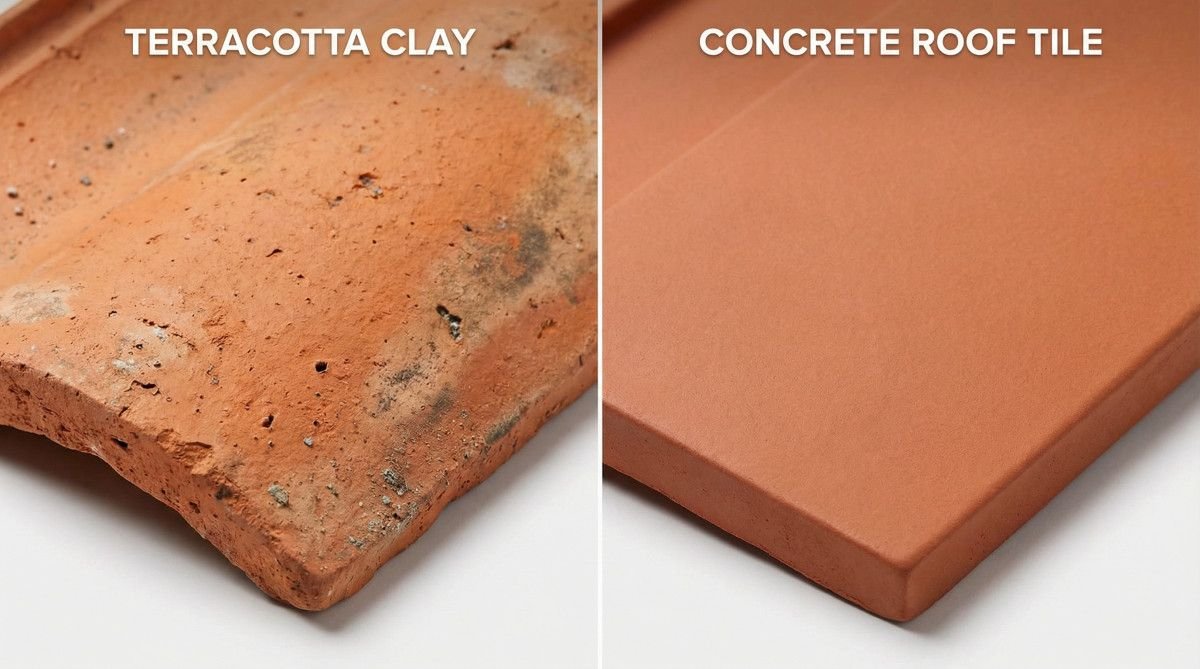
Clay roof tiles are crafted from natural silts and clays, which are molded into specific shapes and fired in high-temperature kilns. This process, often referred to as vitrification, creates a dense, stone-like material that is exceptionally resistant to the elements. The natural minerals in the clay provide the characteristic earthy tones, such as terracotta, which remain consistent throughout the entire body of the tile. Because the color is baked in, it does not fade or peel over time, even under intense solar radiation.
Concrete tiles are manufactured using a mixture of Portland cement, sand, and water, which is molded under high pressure and heat. Unlike clay, the color of concrete tiles is typically applied as a pigment to the surface or mixed into the top layer of the cement. While concrete tiles can be engineered to mimic the appearance of clay, wood shakes, or slate, they are fundamentally different in their physical properties. Concrete is a porous material that relies on its density and surface treatments to shed water and resist environmental wear.
Durability and Lifespan Comparison
When evaluating which material is better for long-term performance, clay tiles are the clear winner in terms of total lifespan. A professionally installed clay tile roof can easily last between 50 and 100 years, with many historical examples exceeding a century of service. This longevity is due to the chemical stability of fired clay, which does not degrade or lose its structural integrity when exposed to moisture or ultraviolet light. Clay is also highly resistant to salt spray, making it an ideal choice for coastal properties.
Concrete tiles are also very durable compared to traditional asphalt shingles, but they generally have a shorter service life than clay. Most concrete tile roofs are expected to last between 30 and 50 years. Over time, the porous nature of concrete can lead to increased water absorption, which may eventually cause the tiles to degrade or develop structural issues. Additionally, the surface pigments on concrete tiles tend to fade after several decades of exposure, which may necessitate painting or coating to maintain the roof’s aesthetic appeal.
Weight and Structural Requirements
Both clay and concrete are considered heavy roofing materials, and they require a reinforced roof structure to support their mass. However, there is a significant difference in weight between the two. Standard clay tiles typically weigh between 600 and 650 pounds per square (100 square feet). This is substantial, but it is often manageable for many homes designed for tile roofing. The low water absorption rate of clay—usually around 6 percent—means that the weight remains relatively stable even during heavy rainfall.
Concrete tiles are significantly heavier, often weighing between 820 and 1,100 pounds per square. This represents a weight increase of nearly 40 to 70 percent over clay. Furthermore, because concrete is more porous, it can absorb up to 13 percent of its weight in water. During a storm, a concrete tile roof can become even heavier, placing additional stress on the building’s rafters and load-bearing walls. Homeowners considering a switch to concrete tile must ensure their home has the necessary structural reinforcement to handle this extreme load.
| Feature | Clay Tile | Concrete Tile |
|---|---|---|
| Average Lifespan | 50–100+ years | 30–50 years |
| Weight per Square | 600–650 lbs | 820–1,100 lbs |
| Water Absorption | ~6% | ~13% |
| Color Longevity | Permanent (baked-in) | Fades over time |
| Freeze-Thaw Resistance | Moderate (can crack) | High |
| Material Cost | Higher ($700–$1,000+) | Lower ($400–$900) |
Performance in Different Climates
Climate is a critical factor in determining which tile is better for a specific home. Clay tiles are renowned for their performance in hot, sunny environments. Their high thermal mass allows them to absorb heat during the day and release it slowly at night, which helps regulate indoor temperatures. However, traditional clay tiles can be susceptible to damage in regions with frequent freeze-thaw cycles. When water enters the small pores of the clay and freezes, it expands, which can cause the tiles to crack or delaminate over time.
Concrete tiles are generally more resilient in colder climates. The manufacturing process for modern concrete tiles includes additives that improve their resistance to freezing temperatures. Because they are less likely to shatter when exposed to ice and snow, concrete is often the preferred choice for homes in northern regions. In terms of wind resistance, both materials perform exceptionally well due to their weight and interlocking designs, often meeting the strict requirements for high-wind zones as defined by industry standards.
Maintenance and Long-Term Care
Maintenance requirements for these two materials differ primarily due to their interaction with moisture. Clay tiles require very little maintenance because their non-porous surface resists the growth of mold, algae, and moss. Occasional inspections to check for cracked tiles or debris in the valleys are usually sufficient to keep the roof in good condition. Because the color is permanent, there is never a need to repaint or reseal a clay tile roof to maintain its appearance.
Concrete tiles require more active management to reach their full lifespan. The porous surface of concrete is a hospitable environment for moss and lichen, which can trap moisture against the tile and accelerate degradation. Homeowners may need to have their concrete tiles professionally cleaned and treated with a clear sealer every few years to prevent water penetration and biological growth. Additionally, if the surface color fades significantly, the roof may require a specialized acrylic coating to restore its look and provide an extra layer of protection against the elements.
Energy Efficiency and Environmental Impact
Both clay and concrete tiles are considered “cool roof” materials because they can be engineered to reflect a significant portion of solar radiation. According to the Environmental Protection Agency, cool roofs can reduce peak cooling demand by 11 to 27 percent in air-conditioned residential buildings. Clay tiles are naturally efficient due to their shape, which allows for airflow beneath the tiles, creating a thermal barrier that prevents heat from reaching the roof deck. This natural ventilation is a major advantage in reducing energy costs during the summer months.
Concrete tiles can also achieve high energy efficiency ratings, especially when treated with reflective pigments or glazes. However, the environmental impact of production differs between the two. Clay is a natural, abundant resource, and the tiles are fully recyclable at the end of their long life. Concrete production is more energy-intensive due to the manufacturing of cement, which is a significant source of carbon dioxide emissions. Nevertheless, the long lifespan of both materials makes them more sustainable than asphalt shingles, which must be replaced and landfilled every 15 to 20 years.
Is clay tile more expensive than concrete tile?
Yes, clay tile is generally more expensive than concrete tile in terms of both material and installation costs. Clay tiles often cost between $700 and $1,000 per square for materials alone, while concrete tiles typically range from $400 to $900. The higher price of clay reflects its longer lifespan and the more intensive firing process required during manufacturing.
Can I walk on a tile roof for maintenance?
It is generally discouraged for homeowners to walk on either clay or concrete tile roofs. Both materials can be brittle and may crack under the weight of a person if stepped on incorrectly. If maintenance is required, it is best to hire a professional roofing contractor who uses specialized equipment and techniques to distribute their weight across the tiles without causing damage.
Which tile is better for high-wind areas?
Both clay and concrete tiles are excellent for high-wind areas because their heavy weight makes them difficult for wind to lift. When properly installed with approved fastening systems, both materials can withstand hurricane-force winds. However, concrete tiles are sometimes favored in these regions because they are slightly less prone to impact damage from wind-borne debris compared to some types of clay.
Do tile roofs require special gutters?
Tile roofs do not necessarily require special gutters, but they do require high-quality, properly sized gutter systems. Because tile roofs shed water very efficiently and do not lose granules like asphalt shingles, the gutters must be able to handle the volume of runoff during heavy rain. It is also important to ensure that the gutter brackets are securely fastened to the fascia to support any additional weight from the tile overhang.
How do I know if my house can support a concrete tile roof?
To determine if your house can support the weight of a concrete tile roof, you must consult with a structural engineer or a licensed roofing contractor. They will inspect your roof’s framing, including the rafters and trusses, to ensure they meet the load-bearing requirements. If your home was originally built for asphalt shingles, it will almost certainly require structural reinforcement before concrete tiles can be installed.
Does the color of the tile affect energy efficiency?
Yes, the color of the tile significantly affects its solar reflectance. Lighter colors, such as white, light gray, or tan, reflect more sunlight and keep the roof cooler than darker colors like deep red or brown. Homeowners seeking maximum energy efficiency should choose tiles that are certified by the Cool Roof Rating Council for their specific solar reflectance and thermal emittance properties.

- I’m Aliza, the founder of Urdu Novel Bank. I built this site because I love Urdu stories and want everyone to enjoy them. As an Urdu literature lover, I choose the best novels to share with you. Here you can find free Urdu novels in romance, mystery, thriller and more. Read online or download PDF chapters without signing up. I update the library often so you’ll always have new tales to explore. My goal is to bring Urdu literature to readers around the world.