Keeping a house cool without air conditioning involves a strategic combination of blocking external heat, maximizing natural ventilation, and minimizing internal heat production. By utilizing passive cooling techniques such as shading, the stack effect, and thermal mass management, homeowners can maintain comfortable indoor temperatures even during peak summer months. These methods are not only energy-efficient but also rely on fundamental principles of thermodynamics to circulate air and reflect solar radiation says Gregory Property Management Bellevue.
Effective Shading and Window Treatments
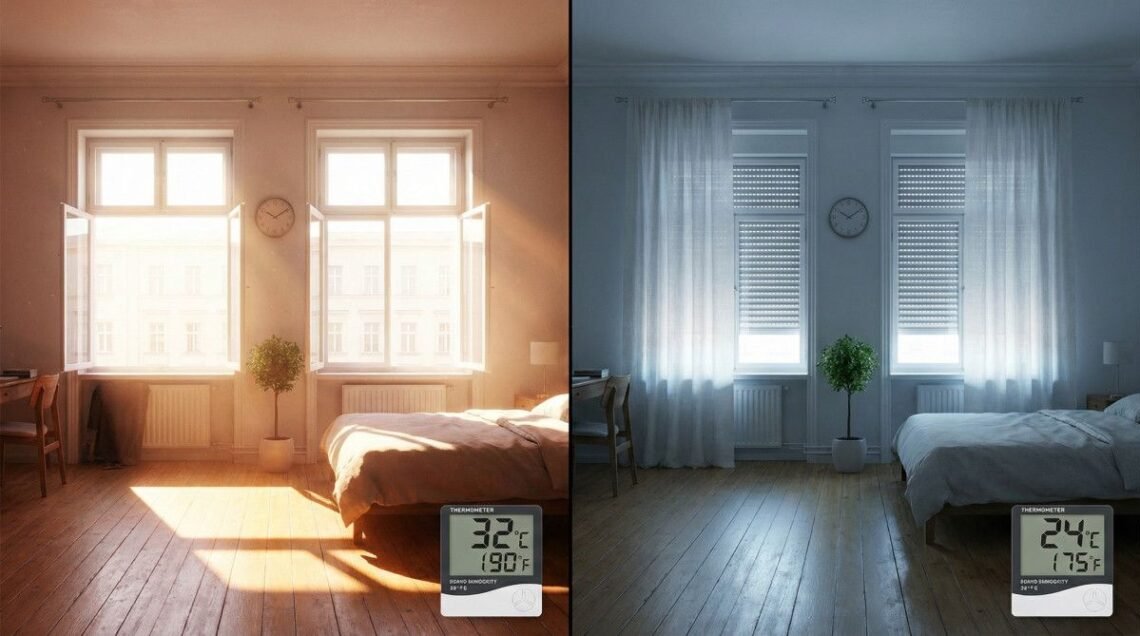
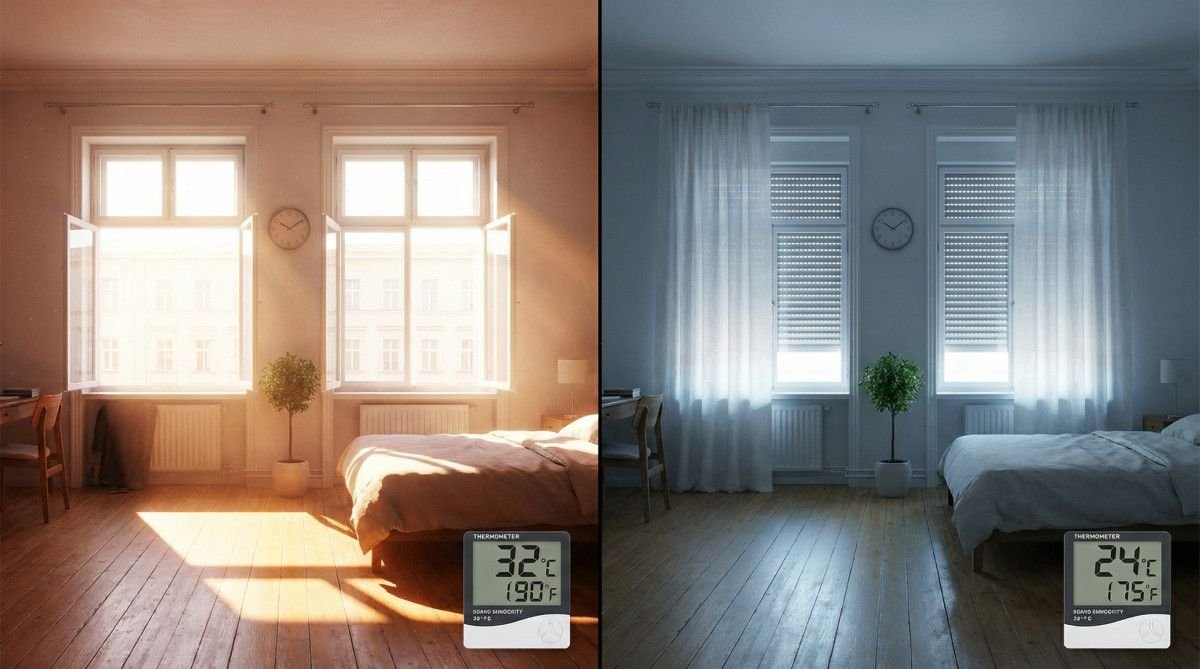
The most critical step in maintaining a cool indoor environment is preventing solar heat from entering the building in the first place. Windows are the primary entry point for thermal energy, and addressing them can significantly reduce indoor temperatures. External shading devices, such as awnings, are particularly effective because they intercept sunlight before it reaches the glass. According to the U.S. Department of Energy, well-designed awnings can reduce solar heat gain by up to 65% on south-facing windows and as much as 77% on west-facing windows.
Internal window coverings also play a vital role in heat management. Highly reflective blinds or cellular shades can block a substantial portion of incoming solar radiation when kept closed during the sunniest parts of the day. Medium-colored draperies with white plastic backings can reduce heat gains by approximately 33%. For a more permanent solution, reflective window films can be applied directly to the glass to block infrared radiation while still allowing visible light to pass through, providing a continuous barrier against thermal transfer.
Leveraging Natural Ventilation and the Stack Effect
Natural ventilation uses wind and pressure differences to move air through a home, flushing out warm air and replacing it with cooler outdoor air. This process is most effective when outdoor temperatures are lower than indoor temperatures, typically during the evening and early morning hours. Cross-ventilation occurs when windows are opened on opposite sides of a room or house, allowing the wind to push air in through the windward side and pull it out through the leeward side.
The stack effect, also known as the chimney effect, is another powerful passive cooling mechanism that relies on convection. As air inside the home warms up, it becomes less dense and rises. By opening windows on lower levels to admit cool air and opening windows or skylights on upper levels to allow warm air to escape, a natural upward flow is created. This movement of air can be enhanced in homes with open floor plans, cathedral ceilings, or multi-story stairwells, effectively venting heat without the need for mechanical fans.
Managing Internal Heat Sources
While external heat is a major factor, internal activities can also contribute significantly to rising indoor temperatures. Household appliances, lighting, and even electronics generate waste heat that accumulates over time. During extreme heat, it is advisable to limit the use of ovens, stoves, and dishwashers, which release both heat and humidity into the air. Switching to LED lighting can also help, as traditional incandescent bulbs release about 90% of their energy as heat rather than light.
Exhaust fans in kitchens and bathrooms should be used strategically to remove heat and moisture at the source. However, these fans should be turned off once their primary task is complete to prevent them from pulling in hot outdoor air. Additionally, ceiling fans can be used to create a wind-chill effect on the skin, making occupants feel up to 4 degrees cooler. It is important to remember that fans cool people, not rooms, so they should be turned off when the room is unoccupied to save energy.
Strategic Landscaping for Passive Cooling
Landscaping is a long-term investment that provides natural shading and can lower the ambient temperature around a home. Deciduous trees planted on the south and west sides of a building provide dense shade during the summer while allowing sunlight to warm the house after they drop their leaves in the winter. Shrubs and groundcover plants can also reduce the temperature of the ground near the house, preventing heat from radiating toward the walls.
Beyond shading, landscaping can be used to direct cooling breezes toward windows. By planting hedges or installing fences at specific angles, homeowners can funnel wind into the house to enhance natural ventilation. Conversely, during the winter, these same features can act as windbreaks to protect the home from cold gusts. This dual-purpose approach to landscaping contributes to a more stable and comfortable indoor climate throughout the year.
Comparing Passive Cooling Methods
Different cooling strategies offer varying levels of effectiveness depending on the climate and the specific design of the home. The following table compares several common passive cooling methods based on their primary function and typical impact on indoor comfort.
| Cooling Method | Primary Function | Typical Effectiveness | Best Application |
|---|---|---|---|
| Exterior Awnings | Heat Prevention | High (65-77% reduction) | South and West windows |
| Cellular Shades | Insulation/Shading | Moderate to High | All interior windows |
| Stack Ventilation | Heat Removal | High (Convection-based) | Multi-story or open designs |
| Ceiling Fans | Personal Cooling | Moderate (Wind-chill) | Occupied living spaces |
| Window Films | Radiation Blocking | Moderate | Large glass surfaces |
Implementing a combination of these methods is often the most effective way to maintain a cool home. For instance, using awnings to block the sun during the day and then opening windows at night to utilize the stack effect creates a comprehensive cooling cycle that minimizes the need for mechanical intervention.
Does opening windows during the day help keep a house cool?
In most cases, opening windows during the day will actually make your house warmer if the outdoor temperature is higher than the indoor temperature. It is best to keep windows and blinds closed during the hottest hours to trap the cooler air inside. Windows should only be opened when the outside air is cooler than the air inside, typically in the late evening or early morning.
How do ceiling fans help if they do not lower the room temperature?
Ceiling fans do not lower the actual temperature of a room; instead, they create a wind-chill effect by moving air over your skin. This helps evaporate moisture more quickly, which makes you feel cooler. Because they cool people rather than spaces, ceiling fans should be turned off when you leave the room to avoid wasting electricity.
What is the most effective way to block heat from windows?
Exterior shading is generally more effective than interior treatments because it stops the sun’s rays before they pass through the glass. Awnings, shutters, and solar screens are excellent choices for exterior protection. If exterior options are not possible, highly reflective interior blinds or blackout curtains can still provide significant relief by reflecting sunlight back out.
Can plants really help cool a home?
Yes, plants cool the environment through a process called transpiration, where they release moisture into the air. Additionally, large trees provide critical shade that prevents the sun from heating up the walls and roof of your home. Strategic landscaping can lower the temperature of the immediate area around your house by several degrees.
Is it possible to use the stack effect in a single-story home?
While the stack effect is most pronounced in multi-story buildings, it can still be utilized in single-story homes with high ceilings or operable skylights. By opening windows at the lowest possible point and opening a skylight or a high window, you can encourage warm air to rise and exit, creating a gentle cooling breeze even without a second floor.
What are the best colors for roofing and exterior walls to stay cool?
Light colors are far more effective at reflecting solar radiation than dark colors. White or light-colored roofs and exterior walls can stay significantly cooler under direct sunlight, reducing the amount of heat that is transferred into the living spaces below. This principle, often referred to as “cool roofing,” is a fundamental aspect of energy-efficient home design.

- I’m Aliza, the founder of Urdu Novel Bank. I built this site because I love Urdu stories and want everyone to enjoy them. As an Urdu literature lover, I choose the best novels to share with you. Here you can find free Urdu novels in romance, mystery, thriller and more. Read online or download PDF chapters without signing up. I update the library often so you’ll always have new tales to explore. My goal is to bring Urdu literature to readers around the world.
Latest Novels
- July 29, 2026Home ImprovementCabinet Painting Cost Per Linear Foot: Complete Pricing Guide for Kitchens
- May 4, 2026Urdu Romantic NovelsHow Incorporating Moroccan Tile Enhances Your Home Décor
- April 29, 2026Home ImprovementHow Finding a Reliable Plumber Near Me Transforms Plumbing Emergencies
- April 27, 2026Home ImprovementHow to Plan a Layered Lighting Scheme for Your Bedroom Renovation