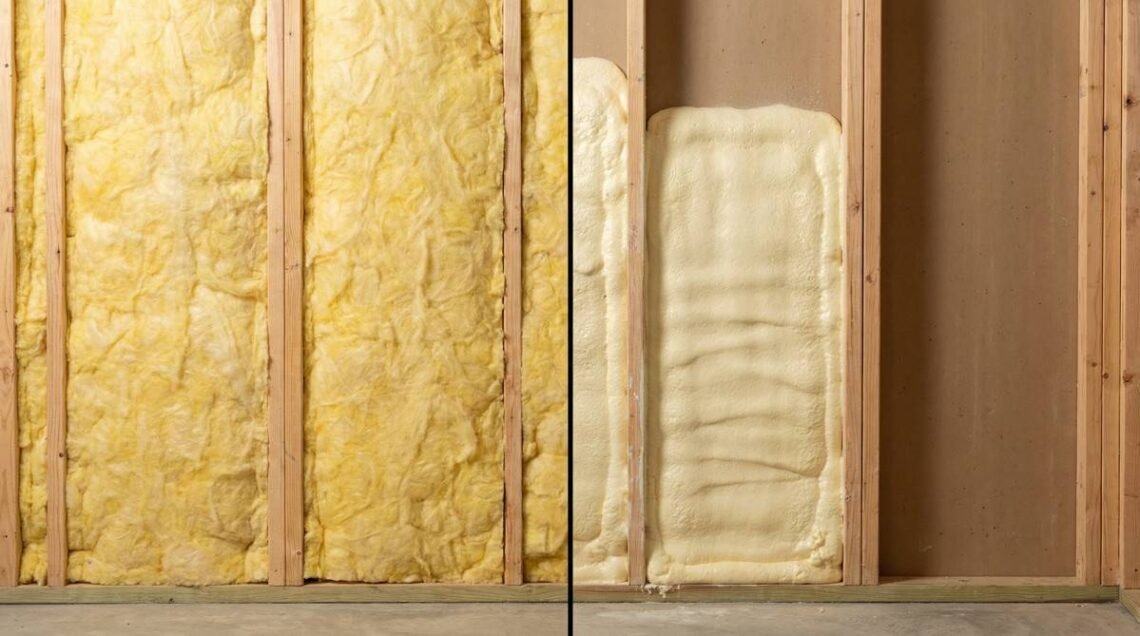
The choice between spray foam and fiberglass insulation depends on your budget, energy-efficiency goals, and the part of the home being insulated. While spray foam offers stronger air sealing and a higher R-value per inch, fiberglass remains a cost-effective and DIY-friendly option for many homeowners. Ultimately, spray foam is often the better option for long-term energy savings and structural performance, whereas fiberglass appeals more to those seeking an affordable traditional solution, explains Sun-Pro Realty and Management experts.
Understanding R-Value and Thermal Performance
When evaluating insulation, the most critical metric is the R-value, which measures a material’s resistance to conductive heat flow. The higher the R-value, the greater the insulating power. Spray foam and fiberglass differ significantly in their thermal performance per inch of thickness. Closed-cell spray foam is the industry leader in this category, boasting an R-value between 6.0 and 7.0 per inch. This density allows it to provide exceptional insulation even in narrow wall cavities.
In contrast, fiberglass insulation typically offers an R-value ranging from 2.9 to 3.8 per inch for batts and 2.2 to 4.3 per inch for blown-in varieties. While fiberglass is effective, it requires a much thicker layer to achieve the same thermal resistance as spray foam. To reach an R-value of R-38 in an attic, you would need approximately 10 to 12 inches of fiberglass, whereas only 6 inches of closed-cell spray foam would suffice.
Thermal drift is a phenomenon that primarily affects closed-cell spray foam. When first applied, the foam contains specialized gases that enhance its insulating properties. Over the first two years, some of these gases may escape and be replaced by air, causing the R-value to settle at its long-term stable level. Even after this adjustment, spray foam maintains a higher R-value than most other common insulation materials.
Air Sealing and Moisture Resistance Capabilities
One of the most significant advantages of spray foam over fiberglass is its ability to create an airtight seal. Spray foam expands upon application, filling every crack, crevice, and gap in the building envelope. This expansion prevents air leakage, which is responsible for up to 40 percent of a home’s energy loss according to industry standards. By eliminating drafts, spray foam helps maintain a consistent indoor temperature.
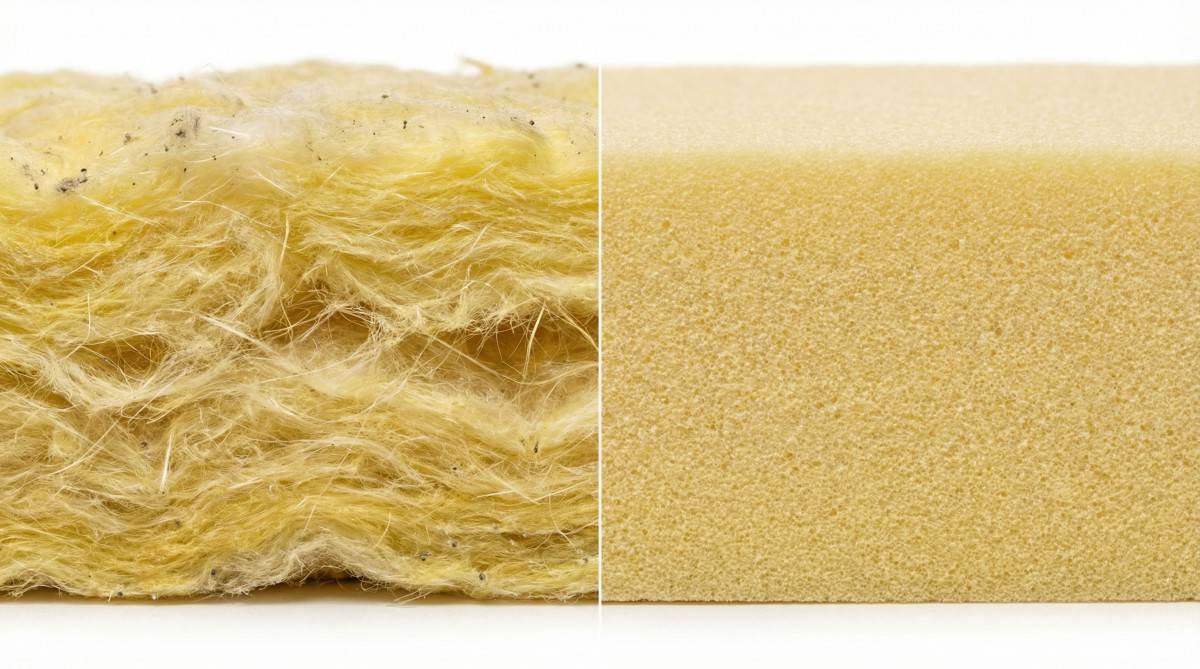
Fiberglass, on the other hand, is a porous material that does not stop air movement. It acts more like a filter than a barrier, allowing air to pass through it relatively easily. To achieve proper energy efficiency with fiberglass, homeowners must perform extensive air sealing using caulk or canned foam before the insulation is installed. Without this extra step, fiberglass can lose a significant portion of its effective R-value as air bypasses the material entirely.
Moisture resistance is another area where the two materials diverge. Closed-cell spray foam is hydrophobic and acts as a vapor barrier, preventing moisture from migrating through walls and ceilings. This is crucial for preventing mold growth and protecting the structural integrity of the home. Fiberglass is highly susceptible to moisture; if it becomes wet, it loses its insulating properties and can become a breeding ground for mold and mildew. In humid climates, the moisture-resistant properties of spray foam provide a significant advantage.
| Feature | Spray Foam (Closed-Cell) | Fiberglass (Batts) |
|---|---|---|
| R-Value per Inch | 6.0 – 7.0 | 2.9 – 3.8 |
| Air Sealing | Yes (Self-Sealing) | No (Requires Manual Sealing) |
| Moisture Resistance | High (Vapor Barrier) | Low (Prone to Mold) |
| Installation | Professional Only | DIY Friendly |
| Lifespan | 80+ Years | 15 – 25 Years |
| Cost | Higher Initial Investment | Lower Initial Investment |
Installation Process and Professional Requirements
The installation process for these two materials could not be more different. Fiberglass insulation is widely available at home improvement stores and is a popular choice for do-it-yourself projects. It comes in pre-cut batts or long rolls that can be easily fitted between wall studs and floor joists. However, installing fiberglass requires strict adherence to safety protocols. The glass fibers can irritate the skin and lungs, necessitating the use of gloves and a respirator.
Spray foam installation is a complex chemical process that requires specialized equipment and professional expertise. The insulation is created by mixing two liquid components—typically an isocyanate and a polyol resin—at the tip of a spray gun. As the liquids react, they expand rapidly to form the foam. Because of the chemical reaction involved, spray foam releases volatile organic compounds (VOCs) during the curing process. Homeowners and pets must typically vacate the premises for 24 to 48 hours until the foam has fully cured and the air is safe to breathe.
Professional installers are trained to ensure the correct mix ratio and application thickness, which are critical for the foam’s performance and safety. An improper mix can result in foam that does not cure correctly, leading to lingering odors or reduced insulating power. Professional installation ensures that the job is done correctly and the building envelope is properly sealed.
Long-Term Durability and Material Lifespan
When considering which insulation is better, durability is a key factor. Spray foam is known for its incredible longevity. Once it cures, it becomes a rigid, stable material that does not sag, settle, or shrink over time. It adheres directly to the building’s surfaces, providing a permanent bond that can even add structural strength to the walls. Most spray foam installations are designed to last for the entire lifespan of the home, often exceeding 80 years without needing replacement or maintenance.
Fiberglass insulation has a more limited lifespan, typically ranging from 15 to 25 years. Over time, gravity can cause fiberglass batts to sag or settle, creating gaps at the top of wall cavities where heat can escape. Fiberglass is also attractive to pests like mice and rats, which may use the material for nesting, further degrading its effectiveness. If the insulation becomes compressed or contaminated by dust and debris, its R-value will decrease, eventually requiring the material to be removed and replaced.
The stability of spray foam means it is less likely to be affected by changes in the home’s environment. It does not provide a food source for pests and is not easily damaged by minor moisture fluctuations. For homeowners looking for a permanent solution, the long-term durability of spray foam often outweighs the lower initial cost of fiberglass.
Cost Analysis and Return on Investment
Cost is often the deciding factor for many homeowners. Fiberglass is significantly more affordable upfront, with material and installation costs typically ranging from $0.50 to $1.50 per square foot. This makes it an attractive option for large-scale projects or for those working with a tight budget. Because it is DIY-friendly, homeowners can save even more by handling the installation themselves, though they should account for the cost of safety gear and the time required for proper air sealing.
Spray foam is a premium product with a price tag to match. Professional installation usually costs between $1.50 and $3.50 per square foot, depending on whether you choose open-cell or closed-cell foam. For a standard-sized home, the total cost of spray foam can be three to four times higher than fiberglass. However, it is essential to look beyond the initial investment and consider the long-term return on investment (ROI).
Because spray foam provides superior air sealing and thermal resistance, it can reduce monthly heating and cooling bills by 25 to 40 percent. In many cases, the energy savings alone can pay for the cost difference within five to ten years. A well-insulated home with spray foam may also have a higher resale value and appeal to energy-conscious buyers. When viewed as a long-term home improvement, the higher cost of spray foam is often justified by the ongoing savings and increased comfort it provides.
Environmental Impact and Sustainability Factors
Both spray foam and fiberglass have unique environmental profiles. Fiberglass is often praised for its high recycled content, with many manufacturers using 40 to 60 percent recycled glass in their products. This reduces the demand for raw materials and diverts waste from landfills. Fiberglass is also naturally fire-resistant and does not require the addition of large amounts of chemical flame retardants. However, the manufacturing process for fiberglass is energy-intensive, requiring high temperatures to melt the glass.
Spray foam is a petroleum-based product, which raises concerns for some environmentally conscious homeowners. The production of the chemical components involves complex industrial processes. However, the primary environmental benefit of spray foam lies in its performance. By significantly reducing a home’s energy consumption over its 80-year lifespan, spray foam can have a lower total carbon footprint than less efficient materials. Some modern spray foams also use renewable materials, such as soy-based polyols, to reduce their reliance on fossil fuels.
When choosing between the two, it is important to consider the local climate and the specific energy needs of the home. In extreme climates where heating and cooling demands are high, the superior efficiency of spray foam may offer the greatest environmental benefit. In more temperate regions, the lower embodied energy of fiberglass might make it a more sustainable choice. Consulting resources like the U.S. Department of Energy can help homeowners make an informed decision based on their specific circumstances.
Is spray foam worth the extra cost?
For many homeowners, spray foam is worth the extra cost due to its superior air sealing and long-term energy savings. While the initial investment is higher than fiberglass, the reduction in monthly utility bills and the increased comfort of a draft-free home often provide a strong return on investment over time. Its long lifespan also means you likely will never need to replace it.
Can I install spray foam myself?
While small DIY spray foam kits are available for sealing minor gaps around windows and doors, whole-house insulation should always be handled by professionals. The process involves complex chemical mixing and specialized high-pressure equipment. Professional installers also ensure proper safety protocols are followed during the curing process to prevent exposure to harmful vapors.
Does fiberglass insulation lose R-value over time?
Yes, fiberglass insulation can lose R-value over time if it settles, sags, or becomes compressed. Gaps created by settling allow heat to bypass the insulation, reducing its overall effectiveness. Moisture and pest infestations can also damage the fibers, further degrading the material’s thermal performance and necessitating replacement after 15 to 25 years.
Which insulation is better for soundproofing?
Both materials offer sound-dampening properties, but they work in different ways. Open-cell spray foam is excellent at absorbing mid-to-high frequency sounds, making it ideal for reducing noise between rooms. High-density fiberglass batts are also effective at blocking sound transmission. For the best results in soundproofing, a combination of dense materials and airtight sealing is usually required.
Is spray foam safe for my home?
Spray foam is considered safe once it has fully cured, which typically takes 24 to 48 hours. During the application and curing process, it releases volatile organic compounds (VOCs) that can be harmful if inhaled. This is why homeowners must vacate the property during installation. Once cured, the foam is inert and does not off-gas, providing a safe and stable insulation layer.
How long does fiberglass insulation last?
Fiberglass insulation typically lasts between 15 and 25 years. Its lifespan can be shortened by factors such as moisture exposure, pest damage, or improper installation that leads to sagging. Homeowners should inspect their insulation periodically for signs of settling or damage, as replacing old or degraded fiberglass is essential for maintaining home energy efficiency.

- I’m Aliza, the founder of Urdu Novel Bank. I built this site because I love Urdu stories and want everyone to enjoy them. As an Urdu literature lover, I choose the best novels to share with you. Here you can find free Urdu novels in romance, mystery, thriller and more. Read online or download PDF chapters without signing up. I update the library often so you’ll always have new tales to explore. My goal is to bring Urdu literature to readers around the world.
Latest Novels
- July 29, 2026Home ImprovementCabinet Painting Cost Per Linear Foot: Complete Pricing Guide for Kitchens
- May 4, 2026Urdu Romantic NovelsHow Incorporating Moroccan Tile Enhances Your Home Décor
- April 29, 2026Home ImprovementHow Finding a Reliable Plumber Near Me Transforms Plumbing Emergencies
- April 27, 2026Home ImprovementHow to Plan a Layered Lighting Scheme for Your Bedroom Renovation