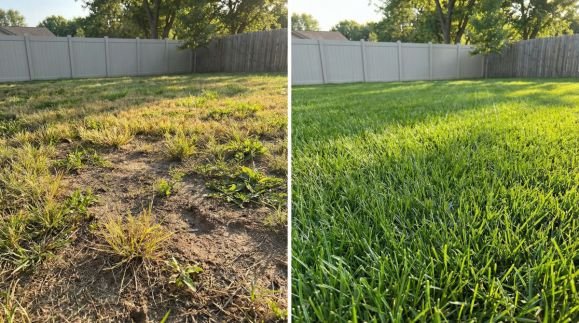
To fix a patchy lawn, start by removing debris and dead grass from the affected areas, then loosen the soil to a depth of about 2 to 4 inches. Apply a high-quality grass seed or sod that matches your existing lawn type, cover it with a thin layer of topsoil or mulch, and maintain consistent moisture until the new grass is established. This process, notes Moore Property Management, gives the new grass the soil contact and nutrients it needs to thrive and blend seamlessly with the rest of your yard.
Identifying the Causes of a Patchy Lawn
Before beginning any repair work, it is essential to understand why the patches appeared in the first place. Common causes include soil compaction, which occurs in high-traffic areas and prevents air, water, and nutrients from reaching the grass roots. Pests such as grubs can also be a significant factor, as they feed on the root systems of healthy grass, leading to brown, easily lifted patches. Additionally, Fungal diseases like brown patch or dollar spot can spread quickly under certain environmental conditions, leaving unsightly bare spots in their wake.
Environmental factors such as improper watering techniques—either too much or too little—can stress the grass and lead to thinning. Pet urine is another frequent culprit, as the high nitrogen content can burn the grass, leaving a dead center often surrounded by a ring of dark green, fast-growing grass. Thatch buildup, a layer of organic matter between the grass blades and the soil surface, can also block essential resources if it becomes too thick. Identifying these underlying issues is the first step toward a long-term solution for a healthy, uniform lawn.
Preparing the Soil for Repair
Proper preparation is the foundation of a successful lawn repair. Begin by clearing the patchy area of any stones, sticks, or dead organic matter. Use a sturdy garden rake to pull up dead grass and loosen the top layer of soil. If the soil is particularly hard or compacted, you may need to use a hand aerator or a small tiller to break it up to a depth of at least 2 inches. This ensures that the new seeds or sod roots can easily penetrate the ground and establish a strong foundation.
In cases where the soil quality is poor, incorporating a small amount of compost or high-quality topsoil can provide a much-needed nutrient boost. Level the area to match the surrounding lawn, ensuring there are no low spots where water might pool. If the patch was caused by pet urine, flushing the area with water before adding new soil can help dilute any remaining salts or nitrogen that might hinder new growth. A well-prepared seedbed is critical for ensuring maximum seed-to-soil contact, which is the most important factor in germination success.
Choosing Between Seed and Sod
When deciding how to fix a patchy lawn, you must choose between using grass seed or sod. Each method has its advantages and is better suited for different situations. Grass seed is generally more cost-effective and offers a wider variety of species, allowing you to match your existing lawn more precisely. However, it takes longer to establish and requires more diligent care during the initial weeks. Sod, on the other hand, provides an instant green surface and establishes its root system much faster, making it ideal for larger patches or areas prone to erosion.
For certain grass types, such as St. Augustine, sod or grass plugs are often the only viable option as these varieties do not produce reliable seeds for home use. When using sod, ensure that the edges of the new piece are tucked tightly against the existing grass to prevent the roots from drying out. Regardless of the method chosen, selecting a high-quality product that is appropriate for your local climate and the amount of sunlight the area receives will significantly improve your chances of success.
| Feature | Grass Seed | Sod Patches |
|---|---|---|
| Cost | Low | High |
| Establishment Time | 6 to 12 weeks | 2 to 3 weeks |
| Effort Level | Moderate (requires frequent watering) | Low (instant coverage) |
| Variety Selection | Extensive | Limited to available turf types |
| Best Use Case | Small patches and overseeding | Large bare areas and instant results |
The Seeding and Planting Process
Once the soil is prepared, spread the grass seed evenly over the bare patch. A general rule of thumb is to apply about 15 to 20 seeds per square inch, though you should always follow the specific recommendations on the product packaging. After spreading the seed, lightly rake it into the soil so it is covered by about an eighth of an inch of dirt. Avoid burying the seed too deeply, as it needs some light and easy access to the surface to germinate successfully. For sod, simply lay the piece over the prepared area and press it down firmly with your foot or a lawn roller to eliminate air pockets.
After planting, applying a thin layer of mulch, such as peat moss or straw, can help retain moisture and protect the seeds from being eaten by birds or washed away by heavy rain. If you are using a starter fertilizer, apply it at this stage to provide the young plants with the phosphorus and nitrogen they need for rapid root development. Be careful not to over-fertilize, as this can burn the tender new growth. The goal is to create a stable, nutrient-rich environment that encourages the new grass to integrate quickly with the established lawn.
Maintenance and Watering Requirements
The most critical phase of fixing a patchy lawn is the first two weeks after planting. During this time, the soil must remain consistently moist but not waterlogged. Lightly watering the area once or twice a day—or more frequently in hot, dry weather—will prevent the seeds or sod roots from drying out. As the grass begins to sprout and reach a height of about one inch, you can gradually reduce the frequency of watering while increasing the amount of water applied during each session. This encourages the roots to grow deeper into the soil in search of moisture.
Avoid walking on the repaired patches until the new grass is well-established. Heavy foot traffic can compress the soil and damage the delicate young blades. Once the grass reaches a height of approximately 3.5 to 4 inches, it is safe to perform the first mowing. Ensure that your mower blades are sharp to avoid tearing the new grass, and never remove more than one-third of the grass blade height in a single cutting. Consistent care and monitoring during these early stages will ensure that the repair is permanent and the lawn remains lush and healthy.
Long-Term Prevention Strategies
To prevent patches from returning, implement a regular lawn maintenance schedule that includes aeration, fertilization, and proper irrigation. Aerating your lawn once a year, typically in the fall or spring, helps alleviate soil compaction and allows nutrients to reach the root zone more effectively. According to the Environmental Protection Agency, healthy lawn practices such as leaving grass clippings on the lawn can provide up to 25 percent of your lawn’s fertilizer needs naturally. This practice, known as grasscycling, also helps retain soil moisture and reduces the need for supplemental watering.
Monitoring for pests and diseases is also vital. Early detection of grub activity or fungal infections can prevent small issues from turning into large, bare patches. Adjust your watering schedule based on the season and weather conditions, aiming for deep, infrequent watering rather than shallow, daily sessions. This promotes a deep root system that is more resilient to drought and stress. By maintaining a thick, healthy stand of grass, you create a natural barrier that makes it difficult for weeds to establish themselves, ensuring your lawn stays beautiful year-round.
How long does it take for grass seed to grow in a bare patch?
Most high-quality grass seeds will begin to germinate within 7 to 21 days, depending on the species and environmental conditions. Factors such as soil temperature, moisture levels, and the type of grass—such as perennial ryegrass which germinates quickly versus Kentucky bluegrass which takes longer—all play a role in the timeline. It typically takes about 6 to 8 weeks for the new grass to become fully established and blend in with the rest of the lawn.
Can I just throw grass seed on top of the bare spots?
Simply throwing seed on top of the ground without preparation is rarely successful. For grass seed to germinate, it must have direct contact with the soil. Debris, thatch, and compacted soil act as barriers that prevent the seeds from taking root. Raking the area to loosen the soil and lightly covering the seeds after application significantly increases the germination rate and ensures a more uniform repair.
What is the best time of year to fix a patchy lawn?
The best time to repair a patchy lawn is during the active growing season for your specific grass type. For cool-season grasses, late summer to early fall is ideal because the soil is warm and the air is beginning to cool, providing perfect conditions for seed growth. Spring is the second-best option. For warm-season grasses, late spring to early summer is the preferred time as the grass enters its peak growth phase.
Why does my grass keep dying in the same spot every year?
Recurring bare patches are often a sign of an underlying issue that hasn’t been addressed. This could be due to severe soil compaction, a localized pest infestation like grubs, or a fungal disease that remains dormant in the soil. It could also be caused by an object buried just beneath the surface, such as a large rock or construction debris, which prevents deep root growth. Investigating the soil quality and drainage in that specific area is necessary to find a permanent fix.
Should I use fertilizer when I am repairing patches?
Using a starter fertilizer is highly recommended when repairing bare spots. Starter fertilizers are specifically formulated with higher levels of phosphorus to support rapid root development in young grass plants. However, you should avoid using standard “weed and feed” products on new grass, as the herbicides they contain can prevent new seeds from germinating or kill tender young sprouts. Always wait until you have mowed the new grass at least three times before applying any weed control products.
How do I know if I should use seed or sod for my repair?
The choice between seed and sod depends on your budget, the size of the patch, and the type of grass you have. Seed is better for small areas and is much cheaper, but it requires more patience. Sod is ideal for large bare areas, sloped ground where seeds might wash away, or for grass varieties like St. Augustine that do not grow well from seed. If you need an instant solution for a high-visibility area, sod is the superior choice.

- I’m Aliza, the founder of Urdu Novel Bank. I built this site because I love Urdu stories and want everyone to enjoy them. As an Urdu literature lover, I choose the best novels to share with you. Here you can find free Urdu novels in romance, mystery, thriller and more. Read online or download PDF chapters without signing up. I update the library often so you’ll always have new tales to explore. My goal is to bring Urdu literature to readers around the world.
Latest Novels
- July 29, 2026Home ImprovementCabinet Painting Cost Per Linear Foot: Complete Pricing Guide for Kitchens
- May 4, 2026Urdu Romantic NovelsHow Incorporating Moroccan Tile Enhances Your Home Décor
- April 29, 2026Home ImprovementHow Finding a Reliable Plumber Near Me Transforms Plumbing Emergencies
- April 27, 2026Home ImprovementHow to Plan a Layered Lighting Scheme for Your Bedroom Renovation