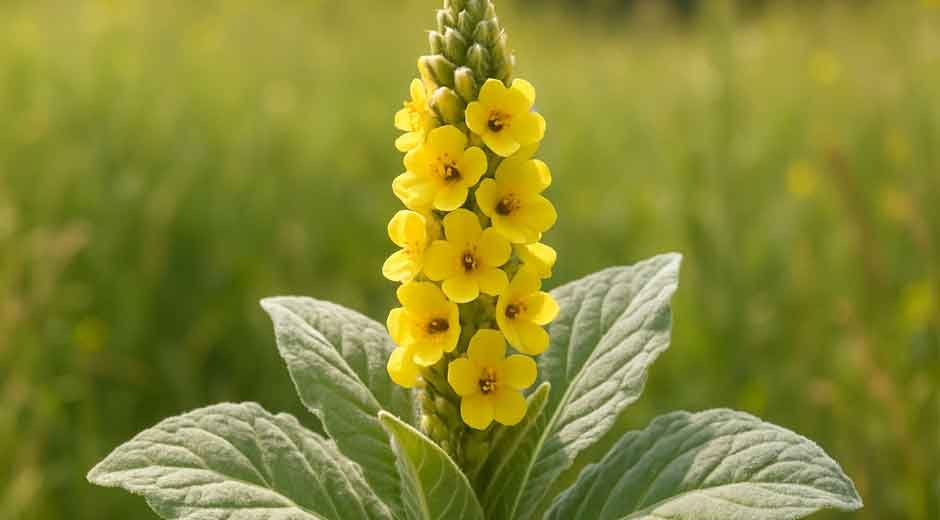
Have you ever noticed a tall, stately plant with soft, velvety leaves and a towering spike of yellow flowers growing by the roadside or in a sun-drenched meadow? This striking biennial is none other than Verbascum thapsus, more commonly known as Common Mullein.
For centuries, this plant has been a quiet, yet powerful, staple in traditional medicine across Europe, Asia, and North Africa. Its uses range from lamp wicks to medicinal teas, earning it a reputation as a versatile and invaluable herb. Today, modern science is beginning to explore the properties that ancient healers have long relied upon.
What is Verbascum Thapsus?
A Botanical Profile
Verbascum thapsus is a biennial plant, meaning it completes its life cycle over two years. In its first year, it forms a dense, low-lying rosette of large, woolly, silver-green leaves. These leaves are soft to the touch, almost like felt.
In the second year, a single, stout, and impressive flower stalk emerges, often reaching heights of six feet or more. This stalk is adorned with numerous bright yellow, five-petaled flowers that bloom sequentially throughout the summer.
The plant thrives in disturbed, sunny soils, which is why it is often found in pastures, along roadsides, and in clearings. Its resilience and striking appearance make it easily recognizable.
Historical and Traditional Uses
The history of Common Mullein is rich and varied. The Romans reportedly dipped its dried stalks in tallow to use as torches, giving it the nickname “torch plant.”
Medicinally, its primary use has always centered on the respiratory system. Traditional practitioners used the leaves and flowers to create teas and tinctures aimed at soothing coughs and clearing congestion.
Beyond respiratory ailments, the plant was also used topically. Mullein oil, infused with the flowers, was a common folk remedy for earaches and skin irritations.
The Primary Health Benefits of Common Mullein
The therapeutic value of Verbascum thapsus is attributed to its rich composition of beneficial compounds. These include saponins, flavonoids, and mucilage, all of which contribute to its healing reputation.
Respiratory Support: The Expectorant Power
One of the most celebrated benefits of Common Mullein is its ability to act as a natural expectorant. An expectorant is a substance that helps to thin and loosen mucus in the respiratory tract.
By making the mucus less viscous, Mullein helps the body to expel it more easily through a productive cough. This action is particularly helpful for conditions like bronchitis, persistent coughs, and general chest congestion.
Furthermore, the plant’s demulcent properties, derived from its mucilage content, create a soothing, protective film over irritated mucous membranes. This dual action helps to calm the throat and bronchial passages.
Soothing Inflammation and Irritation
The flavonoids and other phytochemicals found in Mullein possess significant anti-inflammatory properties. This makes the herb valuable for calming internal irritation, especially within the lungs and throat.
When applied externally, such as in a salve or oil, these anti-inflammatory effects can also help to reduce swelling and pain associated with minor skin wounds and irritations. This traditional use highlights its versatility as a topical aid.
Natural Antiviral and Antibacterial Properties
Research has indicated that extracts from Verbascum thapsus exhibit notable activity against certain pathogens. Studies have shown its potential to inhibit the growth of various bacteria, including some strains responsible for staph infections and pneumonia.
It has also demonstrated antiviral effects, particularly against the influenza virus and certain types of herpes. While much of this research is preliminary and conducted in laboratory settings, it supports the plant’s long-standing use as a general immune-supportive herb.
How to Use Verbascum Thapsus
Mullein Tea: The Most Popular Method
The most common way to consume Mullein for respiratory health is as a tea. The leaves and flowers are steeped in hot water to create a mild, slightly sweet infusion.
It is crucial to strain the tea carefully, as the fine hairs on the leaves can be irritating if ingested. Using a fine-mesh strainer or cheesecloth is highly recommended to ensure a smooth, clear beverage.
Topical Applications: Oils and Salves
Mullein-infused oil is traditionally made by steeping the fresh or dried flowers in a carrier oil, such as olive oil. This oil is then used to gently soothe earaches, a remedy passed down through generations.
The leaves can also be used in poultices or salves for external application to minor burns, bruises, and hemorrhoids. This use leverages the plant’s anti-inflammatory and wound-healing properties.
Safety and Considerations
Potential Side Effects and Risks
Mullein is generally considered safe for most people when consumed as a tea or used topically. There are very few reports of negative side effects or toxicity.
However, as with any herbal product, allergic reactions are possible, particularly with topical use. It is always wise to consult a healthcare professional before adding any new supplement to your regimen, especially if you are pregnant, breastfeeding, or managing a chronic condition.
Quality Matters: Choosing Supplements
Because herbal supplements are not regulated with the same rigor as pharmaceuticals, the quality and potency can vary significantly. When purchasing Mullein products, look for reputable brands.
Seek out products that have been tested by a third party to ensure purity and to confirm that the product contains what the label claims. This diligence helps ensure you receive the full, intended benefits of this ancient herb.
Frequently Asked Questions (FAQ)
Is Verbascum thapsus safe to smoke?
While historically the dried leaves were sometimes smoked to treat lung ailments, this practice is not recommended today. Inhaling any smoke can irritate the lungs, counteracting the plant’s intended benefits.
Can I use Mullein for ear infections?
Mullein oil is a traditional remedy for earaches, but it should never be dropped into an ear if the eardrum is perforated. Always consult a doctor for a proper diagnosis and treatment of an ear infection.
How do I harvest Mullein leaves?
The leaves are best harvested from the first-year rosette before the flower stalk appears, as they are at their most potent. It is important to harvest from clean areas away from roadsides to avoid contamination.
What is the difference between Mullein leaf and flower?
Both the leaf and the flower are used medicinally. The leaves are primarily used for respiratory support, while the flowers are often used to make the infused oil for earaches. Both contain the beneficial compounds.
Is Verbascum thapsus considered a weed?
Yes, in many parts of the world, including the United States, it is considered an invasive or common weed. However, its medicinal value often leads herbalists and gardeners to cultivate it intentionally.

- I’m Aliza, the founder of Urdu Novel Bank. I built this site because I love Urdu stories and want everyone to enjoy them. As an Urdu literature lover, I choose the best novels to share with you. Here you can find free Urdu novels in romance, mystery, thriller and more. Read online or download PDF chapters without signing up. I update the library often so you’ll always have new tales to explore. My goal is to bring Urdu literature to readers around the world.
Latest Novels
- July 29, 2026Home ImprovementCabinet Painting Cost Per Linear Foot: Complete Pricing Guide for Kitchens
- May 4, 2026Urdu Romantic NovelsHow Incorporating Moroccan Tile Enhances Your Home Décor
- April 29, 2026Home ImprovementHow Finding a Reliable Plumber Near Me Transforms Plumbing Emergencies
- April 27, 2026Home ImprovementHow to Plan a Layered Lighting Scheme for Your Bedroom Renovation