Introduction: A Fairy Tale for a Broken World
Guillermo del Toro’s 2006 masterpiece, Pan’s Labyrinth, originally titled El laberinto del fauno, is more than just a film. It is a dark and beautiful tapestry that weaves together the brutal reality of post-civil war Spain with a captivating and often terrifying fantasy world.
At the heart of this mythical realm stands a single, unforgettable figure: the Faun. This ancient creature emerges from a crumbling stone labyrinth to guide the film’s young protagonist, Ofelia, on a journey that blurs the line between dream and reality, innocence and corruption.
Who is the Faun? A Being of Duality
A Guide from the Underworld
The Faun first appears to Ofelia as an imposing, ancient being, seemingly as old as the earth itself. He reveals a fantastic story: Ofelia is not a mere mortal girl but the long-lost Princess Moanna, whose spirit he has awaited for centuries.
His stated mission is to help her reclaim her throne in the Underworld. To do this, she must prove her essence has remained intact by completing three perilous tasks before the moon is full. The fauno labyrinth becomes her proving ground.
A Creature of Ambiguous Morality
Yet, the Faun is no simple, benevolent guide. His nature is intentionally complex, a being of ambiguous morality who is neither purely good nor evil. He is a force of nature, a shepherd for Ofelia’s rite of passage.
As director Guillermo del Toro has explained, the Faun has no personal agenda; he does not care if Ofelia lives or dies. This moral neutrality makes him a far more compelling and unpredictable figure, forcing Ofelia to rely on her own judgment.
The Design of the Fauno Labyrinth: Crafting a Myth
From Dream to Cinematic Icon
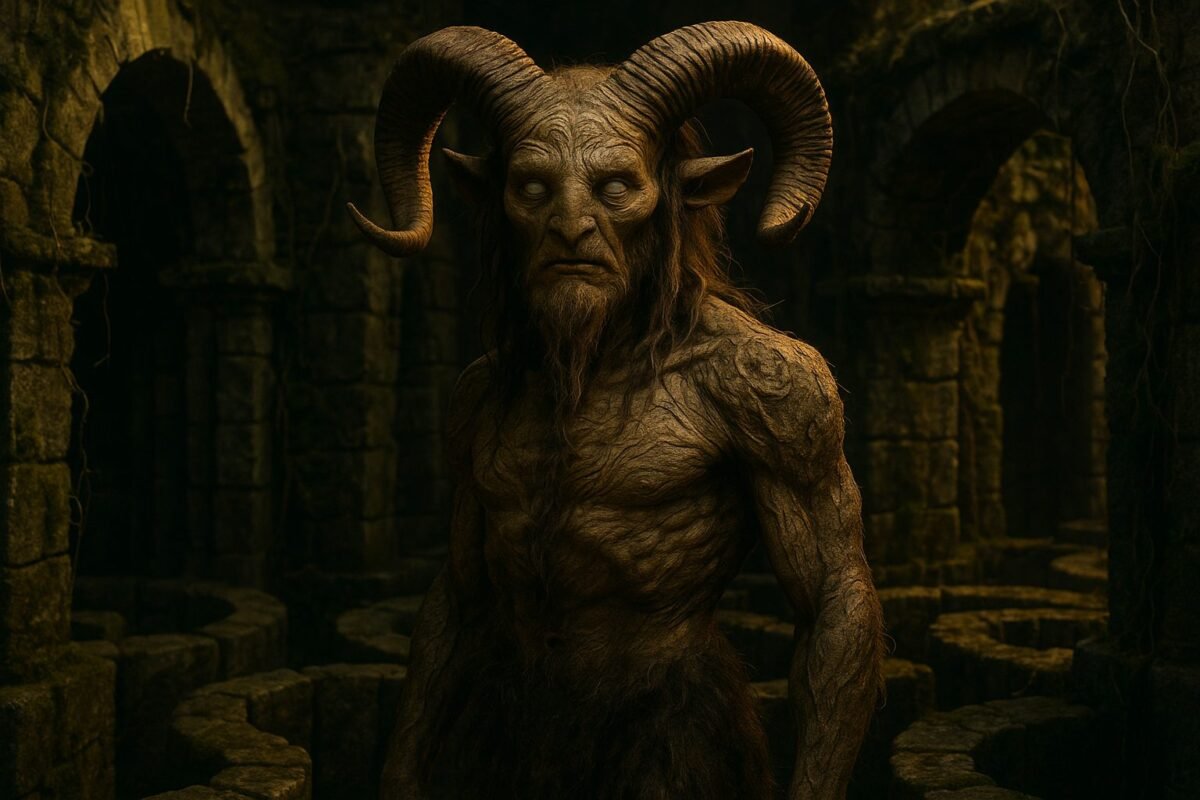
The Faun’s unique design sprang from del Toro’s own childhood dreams. The director intentionally avoided the more common, gentle depictions of fauns, instead creating a creature that was both frightening and beautiful, a cohesive blend of man and beast.
Brought to life through the masterful physical performance of Doug Jones, the Faun’s gnarled, wooden form and milky eyes give him an otherworldly presence. He is a creature of the earth, ancient and powerful.
Symbolism Within the Labyrinth
The fauno labyrinth itself is a potent symbol, a liminal space that exists between the harshness of Ofelia’s reality and the promise of the fantasy world. It is a place of trial and transformation.
The Faun’s influence bleeds into the real world through subtle visual cues. Horned imagery is embedded in the architecture surrounding Ofelia, from her bedframe to the Captain’s chair, suggesting the fantasy world is an ever-present undercurrent to reality.
The Three Trials: A Test of Character, Not Skill
More Than Just Tasks
The three trials the Faun sets for Ofelia are far more than simple quests. They are profound tests of her character, designed to challenge her obedience, courage, and, most importantly, her compassion.
From facing a monstrous toad to retrieving a dagger from the lair of the terrifying Pale Man, each task forces Ofelia to confront her fears and make difficult choices. Her journey through the fauno labyrinth is one of inner development.
The Ultimate Test of Innocence
The final task presents the ultimate moral dilemma. The Faun demands a drop of her newborn brother’s innocent blood to open the portal to the Underworld. It is here that Ofelia’s true character is revealed.
In a defining act of defiance, she refuses to harm her brother. This choice, to spill her own blood rather than an innocent’s, is the final, true test. Her disobedience to the Faun becomes her greatest act of moral clarity.
The Fauno Labyrinth: An Escape or a Deeper Reality?
Fantasy as a Shield
One interpretation of the film is that the entire fauno labyrinth and its inhabitants are a complex psychological escape. Ofelia creates this world to shield herself from the unbearable cruelty of her stepfather and the pain of her mother’s illness.
In this view, the fantasy provides a sense of order and purpose that is absent from her violent reality. The Faun’s tasks give her a sense of agency in a world where she is otherwise powerless.
The Truth in Fairy Tales
However, the film leaves open the powerful possibility that the magical realm is entirely real. Del Toro masterfully balances both interpretations, allowing the audience to choose what to believe.
If the fantasy is real, then Ofelia’s death is not a tragedy but a triumphant homecoming. It is her reward for proving her worth, a final ascension to a kingdom where she will rule with kindness and justice.
Conclusion: The Enduring Legacy of the Faun
The Faun of Pan’s Labyrinth remains one of cinema’s most complex and unforgettable creations. He is not a monster or a savior, but a catalyst for a young girl’s profound journey of self-discovery.
He presides over a world of dark wonders, but the true magic of the fauno labyrinth lies in its ability to reveal the deepest truths of the human heart. It reminds us that in the face of darkness, the choices we make define our reality.

- I’m Aliza, the founder of Urdu Novel Bank. I built this site because I love Urdu stories and want everyone to enjoy them. As an Urdu literature lover, I choose the best novels to share with you. Here you can find free Urdu novels in romance, mystery, thriller and more. Read online or download PDF chapters without signing up. I update the library often so you’ll always have new tales to explore. My goal is to bring Urdu literature to readers around the world.
Latest Novels
- July 29, 2026Home ImprovementCabinet Painting Cost Per Linear Foot: Complete Pricing Guide for Kitchens
- May 4, 2026Urdu Romantic NovelsHow Incorporating Moroccan Tile Enhances Your Home Décor
- April 29, 2026Home ImprovementHow Finding a Reliable Plumber Near Me Transforms Plumbing Emergencies
- April 27, 2026Home ImprovementHow to Plan a Layered Lighting Scheme for Your Bedroom Renovation