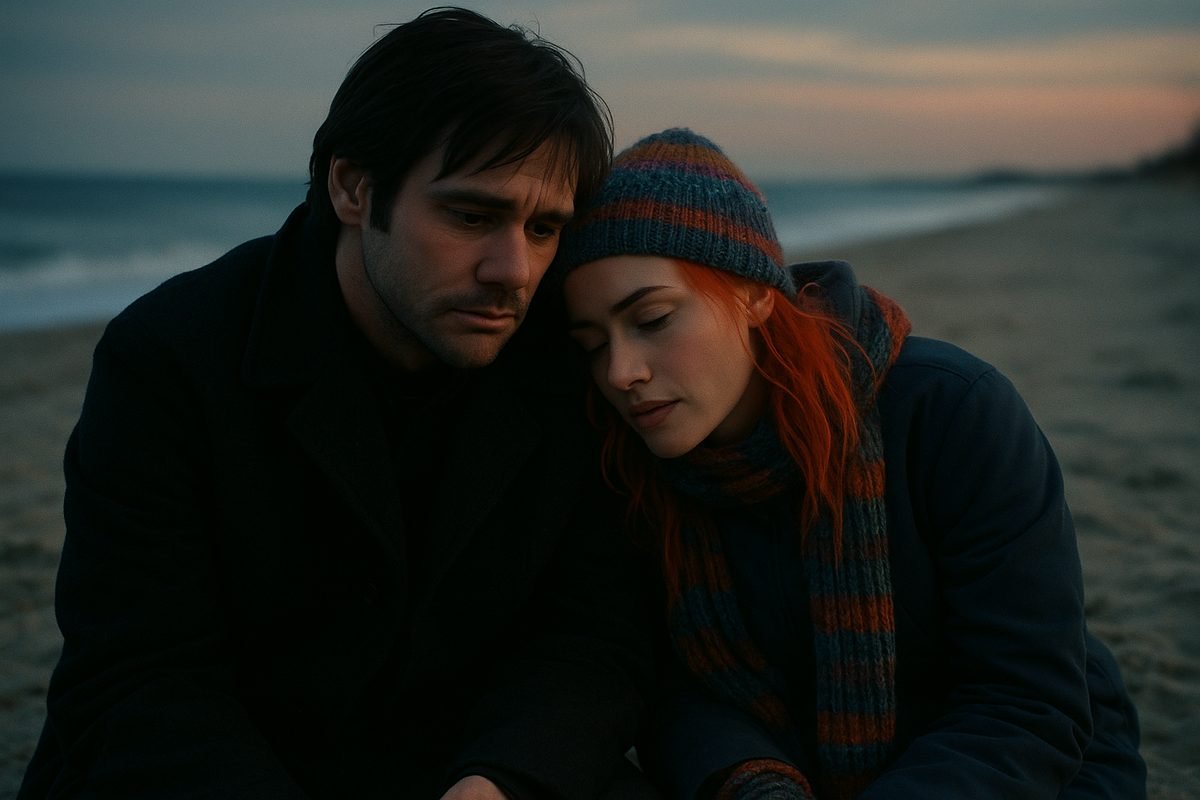
In the landscape of 21st-century cinema, few films have captured the messy, beautiful, and heartbreaking nature of love and memory quite like Eternal Sunshine of the Spotless Mind. Released in 2004 from a celebrated script by Charlie Kaufman, the film’s enduring power comes not just from its ingenious premise but from the distinct and innovative vision of its director, Michel Gondry.
Gondry translated a complex, non-linear narrative into a visually tangible and emotionally resonant experience. He achieved this by rejecting digital perfection in favor of a handmade, practical approach that mirrored the flawed and organic process of memory itself. This exploration delves into the specific directorial techniques Michel Gondry employed to bring one of cinema’s most beloved stories to life.
The Director Who Shows His Work
Michel Gondry operates from a philosophy of visible craftsmanship. He prefers to let the audience see the seams of his creations, believing that the magic is not in hiding the trick but in revealing its cleverness. This approach, honed during his extensive career directing inventive music videos, found its perfect feature-film expression in Eternal Sunshine.
Rather than relying on the seamless, sterile perfection of computer-generated imagery, Gondry embraced practical, in-camera effects that feel tangible and human. He was inspired by the theatrical sleight-of-hand used by early cinema magicians, where the effect is impressive precisely because you can sense the physical effort behind it. This methodology ensures the film’s surreal moments feel grounded in a recognizable reality.
Handheld Intimacy and Natural Light
To capture the authentic, often-uncomfortable intimacy of Joel and Clementine’s relationship, Gondry insisted on a raw, naturalistic visual style. He collaborated with Director of Photography Ellen Kuras, ASC, pushing her to shoot in practical locations using primarily available light. This created significant technical challenges, especially given the film’s setting during one of New York City’s coldest winters.
Kuras filmed with two handheld cameras, often capturing near-360-degree coverage of scenes with minimal rehearsal and no marks for the actors. This forced spontaneity allowed for genuine, unpredictable moments to unfold on screen. The crew developed creative solutions, like a rig of clip-on lights nicknamed the “Mini-Musco,” to supplement the lighting without sacrificing the director’s commitment to a raw, unpolished aesthetic that mirrored the story’s emotional core.
Visualizing the Architecture of Memory
The film’s most iconic sequences are those set within the decaying architecture of Joel’s mind. Gondry’s genius was in translating the abstract concept of memory erasure into a series of concrete, physical events. As Joel’s memories are deleted, the world around him literally falls apart, dissolves, or vanishes in unsettling ways.
These transitions were achieved through clever, often low-fi practical effects designed to elicit a visceral response. Forced perspective, on-set lighting changes, and props manipulated just out of frame created a sense of disorientation and loss. For the famous scene where the ocean floods a beach house, the crew built a section of the set on the shore and let the rising tide do the work, grounding a surreal image in physical reality.
Spontaneity as Creative Strategy
Gondry’s directorial method thrives on calculated chaos and happy accidents. He deliberately limited rehearsal time to a single week, preferring to discover moments with the actors while the cameras were rolling. This trust in his performers’ instincts was a cornerstone of his creative strategy, allowing their contributions to shape the film in unexpected ways.
He famously encouraged and incorporated ideas from his cast. Mark Ruffalo, for instance, suggested his character Stan should have a pompadour and be a fan of The Clash, details that made the quirky technician more memorable. By fostering an environment of collaborative creativity, Gondry ensured the performances felt as spontaneous and alive as his visual approach.
The Gondry-Kaufman Collaboration
The partnership between Michel Gondry and screenwriter Charlie Kaufman was a fusion of conceptual brilliance and visual ingenuity. Having previously worked together on Human Nature, they developed the story for Eternal Sunshine together before Kaufman penned the screenplay. They shared what Gondry described as a “common negativity” balanced with humor, a sensibility that permeates the film.
Their process was one of productive tension. Gondry would challenge Kaufman’s script with his constant “why?” questions, pushing for deeper logic, while Kaufman’s intricate structure provided the framework for Gondry’s visual experimentation. Together, they defended the film’s achronological narrative against studio pressure, understanding that its emotional impact depended on experiencing Joel’s journey out of order.
Technical Innovation Serving Emotional Truth
Every technical choice Michel Gondry made was in service of the story’s emotional truth. His practical effects were not mere spectacle; they were metaphors for the experience of memory and loss. The jarring, handmade quality of the visual effects mirrors the painful, imperfect process of trying to forget someone you once loved.
This commitment extended to every department. Jon Brion’s melancholic and repetitive score enhances the dreamlike state, while the decision to shoot on location in the bleak New York winter added a layer of authentic coldness and isolation. Gondry’s direction ensured that even the most ambitious technical feats remained tethered to the deeply human journey of its characters.
A Director’s Legacy in One Film
While the film rightfully won an Academy Award for Kaufman’s screenplay, it is impossible to imagine Eternal Sunshine of the Spotless Mind without Michel Gondry’s direction. His vision was not just essential; it was the medium through which the story’s full potential was realized. He created a safe yet challenging environment that allowed Jim Carrey to deliver a career-defining dramatic performance.
The film’s influence is a testament to the power of this unique approach. It championed a form of ambitious, personal filmmaking that prioritized creativity over digital ease. Gondry proved that visual innovation and profound emotional depth are not mutually exclusive, cementing his legacy as a director who truly understands how to build worlds from the fragile material of dreams.
Ultimately, Michel Gondry’s work on Eternal Sunshine of the Spotless Mind is a masterclass in directorial vision. He took an unconventional script and crafted a cinematic experience that is as intellectually stimulating as it is emotionally devastating. By embracing imperfection and showing his craft, he created a film that feels less like it was manufactured and more like it was remembered.

- I’m Aliza, the founder of Urdu Novel Bank. I built this site because I love Urdu stories and want everyone to enjoy them. As an Urdu literature lover, I choose the best novels to share with you. Here you can find free Urdu novels in romance, mystery, thriller and more. Read online or download PDF chapters without signing up. I update the library often so you’ll always have new tales to explore. My goal is to bring Urdu literature to readers around the world.
Latest Novels
- July 29, 2026Home ImprovementCabinet Painting Cost Per Linear Foot: Complete Pricing Guide for Kitchens
- May 4, 2026Urdu Romantic NovelsHow Incorporating Moroccan Tile Enhances Your Home Décor
- April 29, 2026Home ImprovementHow Finding a Reliable Plumber Near Me Transforms Plumbing Emergencies
- April 27, 2026Home ImprovementHow to Plan a Layered Lighting Scheme for Your Bedroom Renovation