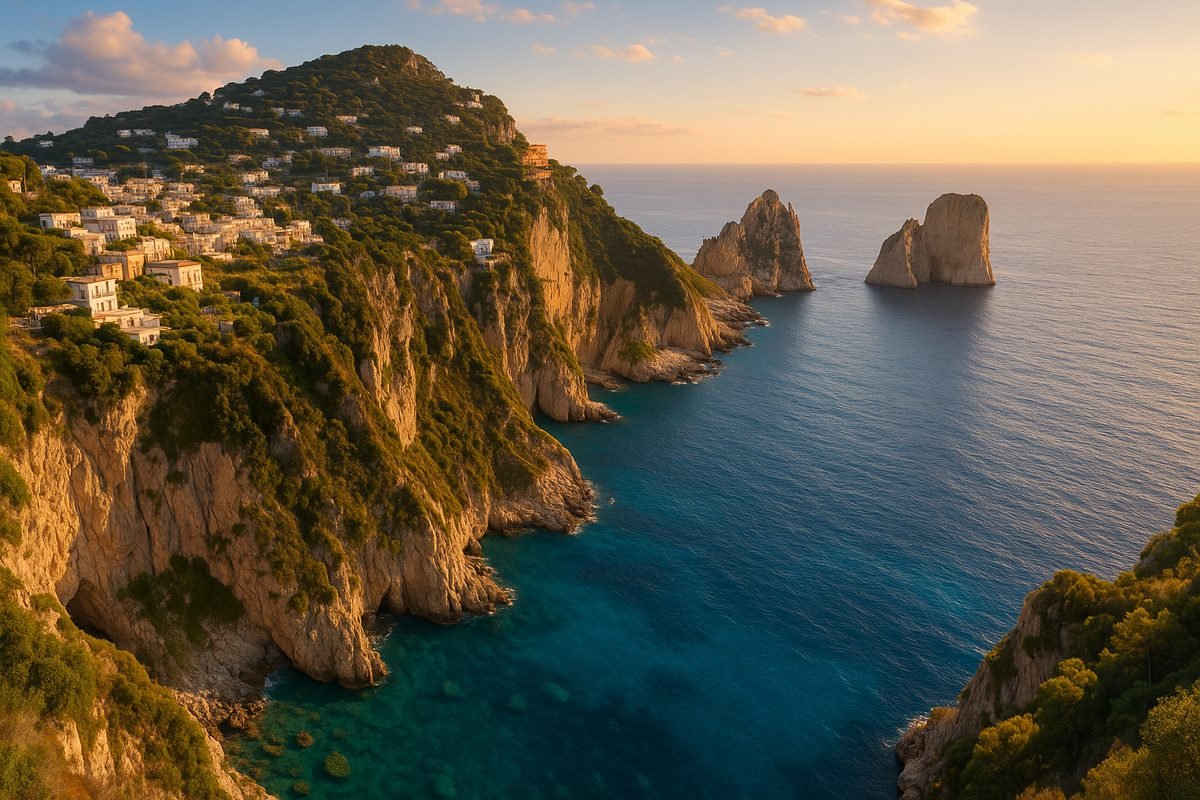
A Timeless Island Carved by Nature and History
When we ask, “How old is Capri?” the answer unfolds in layers, stretching back millions of years. It is a story told not just in historical records but in the very rocks that form this iconic island. From its geological birth to its celebrated status today, Capri has a history as captivating as its famed Blue Grotto.
The island’s age can be viewed from two perspectives: its geological formation and its human history. Geologically, Capri is ancient, a product of immense natural forces. Historically, it is a cradle of civilization, having been inhabited since prehistoric times and cherished by Roman emperors.
The Geological Age: Millions of Years in the Making
The story of Capri begins long before any human set foot on its shores. The limestone rocks that form the island’s dramatic cliffs and sea stacks date back to the Jurassic and Cretaceous periods, making them between 65 and 190 million years old.
However, the island as we see it today took shape much more recently. Its current form was established around 40 to 50 million years ago during the Eocene epoch. For a time, Capri was connected to the Italian mainland, allowing ancient mammals to roam its lands.
Prehistoric Footprints: The First Inhabitants
Archaeological discoveries reveal that Capri has been home to humans since the Stone Age. Evidence from the Paleolithic and Neolithic eras shows that early inhabitants lived on the island when it was still part of the mainland.
Excavations have unearthed stone weapons and the fossilized bones of large prehistoric animals like mammoths and cave bears. These findings paint a picture of a very different Capri, a wild and untamed land.
The Dawn of Civilization: Greek and Roman Eras
Capri entered written history with the arrival of the ancient Greeks in the 8th century BC. They established the first settlements, leaving behind traces of their presence, such as the ancient Phoenician Steps that link the main port to the town of Anacapri.
The island truly rose to prominence during the Roman era. In 29 BC, Emperor Augustus was so enchanted by Capri’s beauty that he acquired it from the city of Naples. He built villas and temples, transforming it into his private paradise.
His successor, Emperor Tiberius, moved the seat of the Roman Empire to Capri in 27 AD, ruling from the magnificent Villa Jovis for the last decade of his life. The ruins of his twelve villas are a testament to the island’s imperial past.
Echoes of the Past: From the Middle Ages to the Renaissance
After the fall of the Roman Empire, Capri faced centuries of turmoil. It was subjected to frequent raids by Saracen pirates, forcing the islanders to build fortified settlements and seek refuge in caves.
During the Middle Ages, the island was ruled by various powers, including the Lombards, Normans, and the Spanish. Despite the constant threat of invasion, this period saw the construction of important landmarks like the Charterhouse of St. Giacomo.
A Grand Tour Destination: The Rebirth of Capri
Capri was rediscovered in the 19th century by artists, writers, and intellectuals on the Grand Tour. The accidental rediscovery of the Blue Grotto in 1826 sparked a wave of international interest, drawing visitors from across the globe.
This cultural renaissance transformed the island into a haven for creatives and a fashionable resort for European aristocracy. It became a place of inspiration and escape, cementing its reputation as a jewel of the Mediterranean.
Capri Today: A Legacy of Timeless Allure
From the 1950s onward, Capri became the playground of the international jet set, a symbol of la dolce vita. Its breathtaking landscapes and glamorous atmosphere have continued to captivate visitors.
So, how old is Capri? It is as ancient as the dinosaurs and as modern as the latest fashion. It is an island where millions of years of geology meet thousands of years of human history, creating a destination that is truly timeless.

- I’m Aliza, the founder of Urdu Novel Bank. I built this site because I love Urdu stories and want everyone to enjoy them. As an Urdu literature lover, I choose the best novels to share with you. Here you can find free Urdu novels in romance, mystery, thriller and more. Read online or download PDF chapters without signing up. I update the library often so you’ll always have new tales to explore. My goal is to bring Urdu literature to readers around the world.
Latest Novels
- July 29, 2026Home ImprovementCabinet Painting Cost Per Linear Foot: Complete Pricing Guide for Kitchens
- May 4, 2026Urdu Romantic NovelsHow Incorporating Moroccan Tile Enhances Your Home Décor
- April 29, 2026Home ImprovementHow Finding a Reliable Plumber Near Me Transforms Plumbing Emergencies
- April 27, 2026Home ImprovementHow to Plan a Layered Lighting Scheme for Your Bedroom Renovation